


Building in Minnesota’s Winter: The Cold Weather Construction Advantage
Why the most experienced Minnesota builders don’t stop when the snow starts
“So, Do You Just Stop Building in Winter?”
We hear this question every fall. Clients signing contracts in September want to know if their project will sit frozen under a tarp from December through March. They’ve driven past construction sites that look abandoned as soon as the snow flies, and they assume that’s how it has to be.
It doesn’t.
In fact, some of Stonewood’s finest work happens when temperatures drop below zero. After decades of building custom homes across the Twin Cities and greater Minnesota, we’ve learned that winter isn’t an obstacle to overcome. It’s an opportunity to build better. The cold weather construction season rewards builders who are prepared, experienced, and genuinely committed to keeping their clients’ projects moving. Here’s why working through Minnesota’s winter might actually work in your favor.
The Myth of the Winter Building Shutdown
Let’s address the assumption head-on: yes, extreme cold creates real challenges. Concrete needs protection to cure properly. Certain exterior work must wait for specific temperature windows. Workers require additional safety protocols and gear. These are legitimate considerations that any serious builder must plan for carefully.
But a complete shutdown? That’s a choice, not a necessity.
Builders who stop work from November through April aren’t responding to conditions that make building impossible. They’re responding to conditions that require expertise, planning, and investment that not every builder has developed. The difference between builders who work through winter and those who don’t often comes down to experience, resources, and a fundamental commitment to keeping client projects on schedule rather than on the builder’s terms.
“Minnesota has a four-month construction season if you let it. Or a twelve-month season if you know what you’re doing.”
At Stonewood, we’ve spent two decades refining our cold weather construction protocols. We understand how to work safely and effectively when temperatures challenge both materials and workers. This hard-won knowledge keeps Stonewood projects moving when other sites go dark, and it keeps our clients on schedule to move into their new homes months ahead of what they’d experience elsewhere.

Structural Drying
Minnesota’s dry winter air creates ideal conditions for wood framing to reach optimal moisture content, reducing movement, cracking, and finish problems down the line.
Controlled Interiors
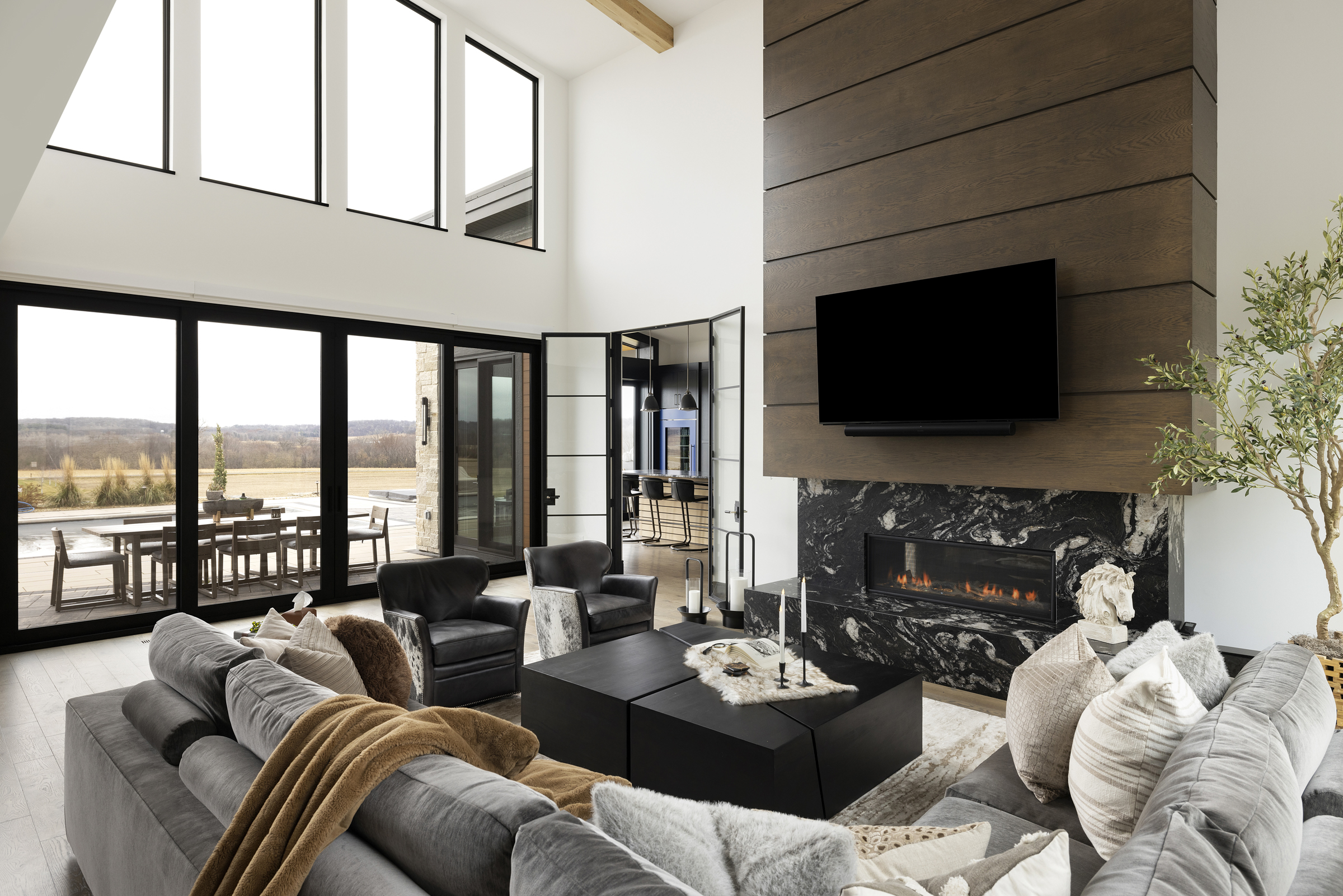
Once a home is dried in, we control the interior environment precisely. Hardwood floors acclimate properly, paint cures consistently, and drywall dries without summer humidity swings.
Focused Craftsmanship
Without exterior projects competing for attention, finish crews dedicate full focus to the detail work that defines a Stonewood custom home. That concentration shows in the results.
Why Winter Construction Can Actually Improve Quality
Here’s the counterintuitive truth that Stonewood has validated across hundreds of Minnesota custom homes: certain aspects of home building don’t just survive cold weather. They genuinely benefit from it.
Structural Drying
Minnesota’s winter air is remarkably dry. Once a home is dried in, meaning the roof and exterior are weather-tight, the interior becomes an ideal environment for structural components to reach optimal moisture content. Wood framing that dries during winter stabilizes faster and more completely than framing that cures during humid summer months. This matters because wood that reaches equilibrium before finishes are applied is significantly less likely to move, crack, or create problems years later. Trim carpentry, in particular, benefits from being installed in a properly conditioned, low-humidity environment.
Controlled Interior Conditions
With the shell complete, Stonewood can control the interior environment with precision. Temporary heating and humidity management allow us to create ideal conditions for sensitive finish work regardless of what’s happening outside. This controlled environment often produces better finish outcomes than fighting Minnesota’s summer humidity and temperature swings. Paint cures more uniformly. Adhesives set correctly. Tile work sets without the complications that heat extremes can introduce.
Focused Craftsmanship
Experienced craftsmen genuinely prefer interior work during winter months. Without the distractions of competing exterior projects, finish crews can dedicate their full attention to the detail work that defines a custom home. There’s a focused quality to working inside a warm, quiet home while snow falls outside, and that attention shows in the final results. Stonewood’s winter crews are among our most skilled and dedicated workers, drawn specifically to the precision and pride of cold-weather finish work.
The Stonewood Cold Weather Commitment
When Stonewood takes on a project with a winter build window, we commit fully. That means deploying proper temporary heating, specifying cold weather-appropriate materials and concrete mixes, maintaining communication with our clients about any weather-related schedule adjustments, and never using “it’s winter” as an excuse for standing still. Minnesota’s weather is our context, not our limitation.
Cold Weather Foundations: The Critical Window
The most weather-sensitive phase of any construction project is foundation work. Concrete requires specific temperature ranges to cure properly, and getting this right is not optional. It is structural. Stonewood plans foundation work strategically, targeting late fall or early spring temperature windows whenever possible. When project schedules require winter foundation work, we deploy a set of proven cold weather techniques that protect both quality and structural integrity.
Heated Enclosures
We create temporary heated environments around foundation work, maintaining proper curing temperatures even in extreme cold. This isn’t improvised. It is planned, engineered, and monitored from the first pour.
Cold Weather Concrete Mix Design
Working closely with our concrete suppliers, Stonewood specifies mixes with appropriate admixtures and cement content for cold weather placement. These formulations generate more internal heat during the curing process and reach design strength faster than standard mixes.
Insulated Curing and Temperature Monitoring
Concrete generates heat as it cures, a process called hydration. Proper insulation retains that heat, allowing curing to continue even when ambient temperatures fall well below freezing. Stonewood tracks concrete temperatures throughout the curing process, ensuring specifications are met and creating documentation for future reference. There are no shortcuts, and there’s no guesswork.
The key insight every Stonewood client should understand: cold weather foundation work requires additional planning and investment, but it absolutely can be done right. The question isn’t whether it’s possible. It’s whether your builder has the expertise and commitment to do it properly. That question has a clear answer when you build with Stonewood.
Exterior Work: The Art of Strategic Scheduling
Certain exterior work genuinely does require warmer temperatures. Roofing materials, exterior paint, and some sealants carry minimum application temperatures that exist for good reason and can’t be safely ignored. Any builder who tells you otherwise isn’t being straight with you.
Stonewood’s approach is intelligent sequencing. We schedule temperature-sensitive tasks for windows when conditions allow, while advancing interior and structural work during colder periods. This isn’t delay. It is the kind of project management that keeps the overall build moving efficiently while respecting what the materials require.
In practice, this means roofing might wait for a January warm spell (and Minnesota reliably provides a few), exterior painting is scheduled for spring while interior finishes advance through winter, and window installation proceeds in cold weather using proper techniques and installation protocols that account for temperature differentials. The result is a project that progresses steadily rather than stopping entirely, and clients who reach their move-in date months earlier than they expected.
The Schedule Advantage: Real Numbers, Real Savings
Here’s the practical benefit of winter construction with Stonewood: you may be able to move into your new home months earlier than you imagined. The comparison speaks for itself.
| Scenario | Groundbreaking | Dried In | Move-In | Total Timeline |
|---|---|---|---|---|
| A: Spring Start (Stonewood) | April | September | Following Spring | ~12 months |
| B: Fall Start (Stonewood) | September | December | Following Summer | ~12 months, shifted earlier |
| C: Spring Start, Winter Shutdown | April | September | Second Fall | 16–18 months |
The difference between Scenario A and Scenario C isn’t building time. It’s four to six months of your life waiting for a builder who chose not to work through winter. With Stonewood, that time is yours back.
What Stonewood Does to Build Through Winter
- Temporary heating for worker comfort and material requirements
- Cold weather concrete mix specifications and monitoring
- Insulated curing blankets and heated enclosures for foundations
- Strategic scheduling of temperature-sensitive exterior tasks
- Cold weather safety training and worker health protocols
- Proactive communication on weather-related schedule adjustments
- Site snow removal keeping access open for crews and deliveries
- Early material procurement to prevent winter lead-time delays
- Lock-in of design decisions before interior work begins
- Coordination with specialty subcontractors for winter availability
What You Gain When Stonewood Builds Through Winter
- Move-in date months ahead of builders who shut down
- Finish work completed in ideal dry-air interior conditions
- Wood framing that stabilizes before finishes are applied
- Dedicated finish crews focused entirely on your project
- Full project momentum without seasonal restarts
- Flexibility in scheduling your groundbreaking date
- Confidence that budget and timeline are not weather-dependent
- A builder with genuine Minnesota expertise, not seasonal limitations
- No mid-project morale loss from prolonged winter pauses
- A home that reflects sustained craftsmanship, not stop-and-start work
Worker Safety: The Non-Negotiable Foundation
Building in Minnesota’s winter requires genuine investment in worker safety and comfort. Cold stress is real, productivity suffers when workers are miserable, and no project timeline is worth compromising the people doing the work. Stonewood takes this seriously because it reflects both our values and our understanding that great construction requires great workers who are well taken care of.
Interior spaces on Stonewood projects are heated to maintain worker comfort alongside material requirements. Outdoor work is scheduled for the warmest parts of the day when possible, with cold weather safety training and active monitoring for all crews. We work exclusively with subcontractors who invest in proper cold weather equipment and share our commitment to worker wellbeing, because a cold, miserable crew produces different results than one that feels supported and prepared.
The craftsmen who work through Minnesota winters are a particular breed. They’re experienced, committed, and take genuine pride in their ability to produce excellent work in conditions that would send others indoors. This self-selection means Stonewood’s winter crews consistently include our most skilled and dedicated workers, and the quality of the finished product reflects that.

Lock Decisions Early
Winter is not the time to be debating kitchen layouts. Complete design selections before interior work begins, and your project runs on a tight, efficient timeline.
Material Lead Times
Stonewood works with clients to ensure specialty materials arrive on schedule, are properly stored, and are acclimated before installation. No winter delays from procurement gaps.
Proactive Communication
Weather occasionally shifts schedules. Stonewood communicates proactively so you’re always informed, without the anxiety of wondering whether your project has stalled.
Planning for Winter Success
If you’re considering a custom home that will involve winter construction, a few planning considerations can make the difference between a seamless process and an avoidable headache. Stonewood works through these considerations with every client whose project spans the colder months.
Design Decisions
Lock in design decisions early. Winter is not the time to be debating kitchen layouts or fixture selections. The more complete your choices are before interior work begins, the more efficiently that work proceeds. Indecision during active construction is costly in any season; during winter, when interior crews are focused and productive, it is particularly disruptive. Stonewood guides clients through a thorough pre-construction selection process precisely to prevent delays once the build is in motion.
Material Lead Times
Some specialty materials carry long lead times. Stonewood works with clients well in advance to ensure that materials arriving during winter are properly stored and acclimated before installation. Planning ahead prevents delays when the installation window opens. A custom tile ordered in November needs to be on-site and ready when the tile setter arrives in January, not still in transit. Stonewood’s procurement process accounts for these timelines systematically, not as an afterthought.
Communication Expectations
Winter construction means weather will occasionally influence schedules. A foundation pour might shift by a few days while we wait for the right temperature window. Exterior work might pause during a particularly severe cold snap. These are normal, manageable adjustments, not setbacks. Stonewood communicates proactively about any weather-related changes, keeping clients fully informed without creating unnecessary concern. You will always know where your project stands.
Site Access
Snow removal keeps your site accessible through every phase of winter construction. Stonewood coordinates plowing and site maintenance to ensure that crews, deliveries, and inspections can reach the property regardless of what the weather delivers. A well-managed winter site runs as smoothly as a summer site. That level of operational coordination is part of what it means to build with a team that has done this for decades.
We broke ground in October and moved in the following July. Our builder friends kept telling us we’d have to wait until spring to restart, but Stonewood just kept going. I’m not sure we could have survived another Minnesota winter in our old house.
The Minnesota Builder’s Advantage
Not every builder can execute winter construction well. Those who can have invested in the knowledge, relationships, and systems that make it possible. It’s a competitive advantage that separates builders who truly understand Minnesota from those who simply work here during the comfortable months.
At Stonewood, we’ve spent decades refining our cold weather approach. We’ve learned what works, what doesn’t, and how to maintain the quality standards our clients expect regardless of what the thermometer reads. This experience means we can offer something genuinely valuable: reliable project timelines that don’t carry a four-to-six month penalty just because of when your project starts.
Minnesota’s winter isn’t a construction barrier. It’s a test that separates builders with deep local expertise from those without it. When you work with a builder who knows how to navigate winter safely and effectively, you gain scheduling flexibility, meaningful time savings, and the confidence that comes from working with true Minnesota building professionals. The question isn’t whether winter construction is possible. The question is whether your builder knows how to do it right.
Why Choose Stonewood for Year-Round Custom Home Construction
Stonewood Custom Homes builds year-round in Minnesota, applying two decades of cold weather expertise to keep projects on schedule without ever compromising on quality. Our experience with cold weather concrete techniques, controlled interior finishing, strategic exterior scheduling, and worker safety protocols means your project doesn’t pause when other builders pack up for winter. We understand that your timeline matters, your investment is significant, and your new home deserves a builder who treats every month of the year as an opportunity to build something exceptional.
Ready to Build Your Custom Home on Your Timeline?
Don’t let the calendar limit your possibilities. Stonewood Custom Homes brings two decades of Minnesota winter construction experience to every project, keeping your build moving through every season without sacrificing the quality your new home deserves.
Whether you’re planning to break ground this fall, winter, or spring, Stonewood’s team of experienced builders will create a realistic, committed timeline and deliver a custom home that reflects everything Minnesota’s best craftsmanship can offer, regardless of the weather outside. From Wayzata to the wider Twin Cities region, Stonewood builds when others wait.
Your new home shouldn’t have to wait an extra season. Let’s talk about what a Stonewood custom build can look like for you.
Start Your Stonewood Custom Home Project