

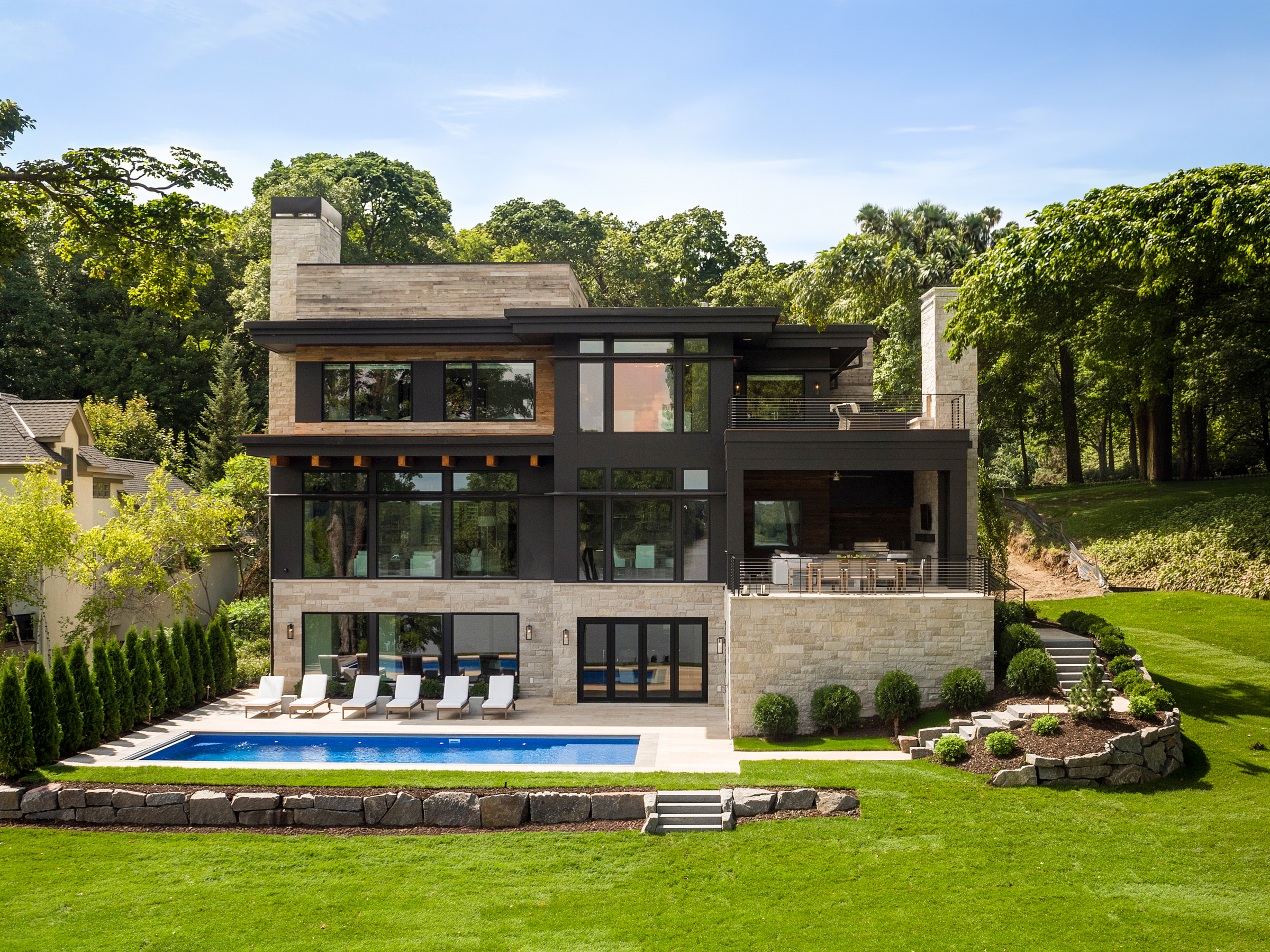
A Custom Home Should Feel Inevitable When It’s Done
The Quiet Discipline Behind a House That Feels Like It Was Always Meant to Be There
There is a particular kind of silence that falls over a homeowner the first time they walk through their finished custom home. It isn’t the excitement of moving day, and it isn’t relief that the process is over. It’s something quieter than that. It’s the feeling of standing in a room and thinking, of course this is where the kitchen goes. Of course the light falls here in the morning. Of course this is what the house was supposed to be.
That feeling, the sense that a home couldn’t have turned out any other way, is not an accident. It’s not luck, and it isn’t simply good taste. It is the result of hundreds of decisions made correctly, in the right order, by people who understood that the goal was never to impress on day one. The goal was to disappear into rightness. Stonewood has built its reputation on exactly that outcome: homes that feel inevitable, not engineered, homes that stop looking like a construction project the moment they’re finished and start looking like a fact of the landscape.
It’s a strange goal to chase, because the harder a builder works toward it, the less visible that work becomes. A home that feels inevitable hides its own difficulty. It doesn’t ask to be admired for how hard it was to build. It simply asks to be lived in, easily, for decades. And that, Stonewood has learned across nearly eight decades of building custom homes throughout the Lake Minnetonka corridor and the greater Twin Cities, is precisely the point. The homes that generate the most conversation on a job site are rarely the ones that end up feeling the most right once the scaffolding comes down and the family moves in. The quiet ones, the ones that never called attention to a single decision along the way, are almost always the ones that age into something a family can’t imagine living without.
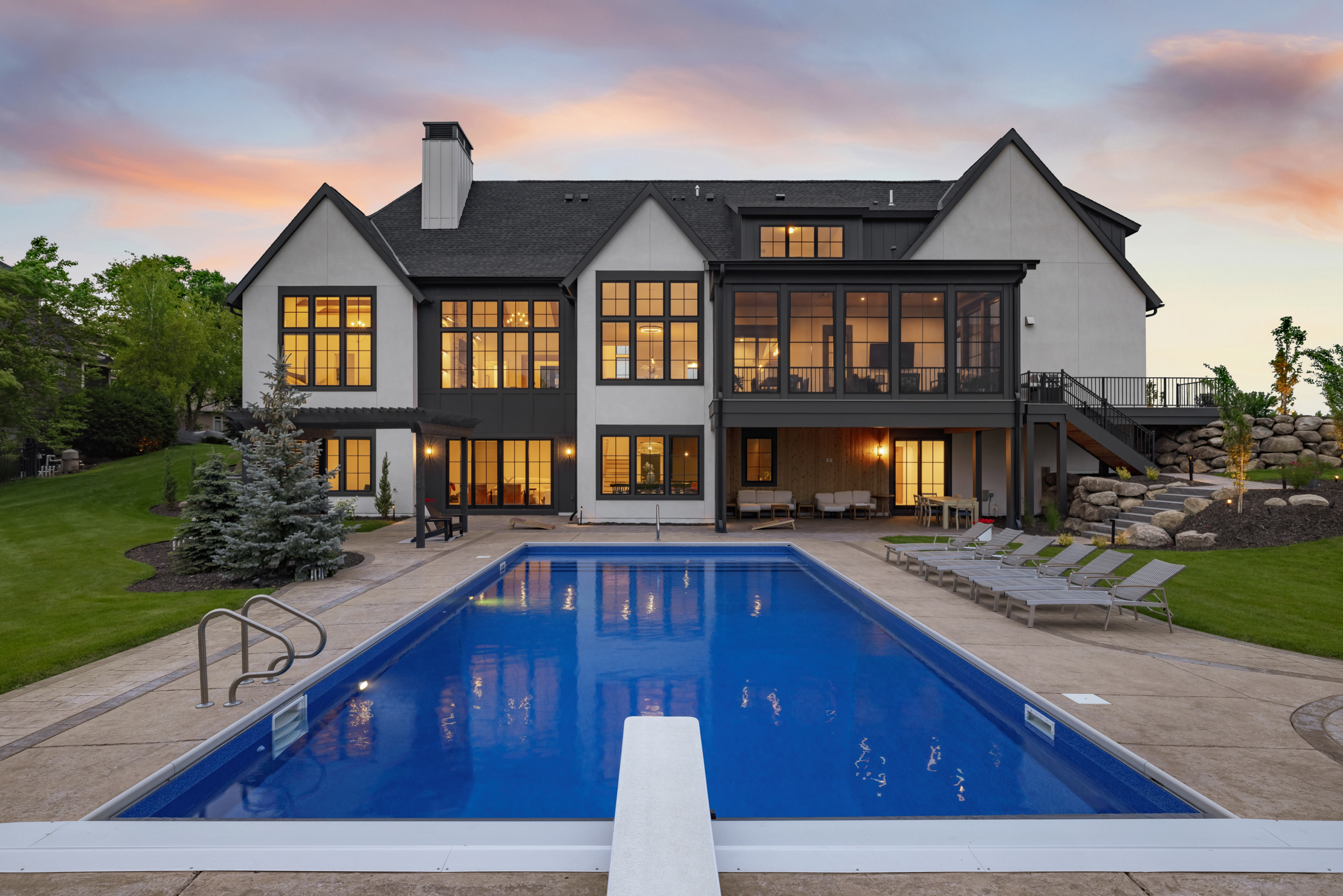
Why “Inevitable” Is the Hardest Feeling to Build
Ask most people what makes a custom home great, and they’ll describe a feature. The kitchen island. The wall of windows. The stone fireplace. But ask the people who actually live in a truly successful custom home what they love most about it, and the answer is rarely a single feature at all. It’s an atmosphere. A sense that the house simply works, room after room, season after season, without friction. It’s the absence of small daily irritations that homeowners in lesser-built houses learn to live with and eventually stop noticing, the door that never quite closes right, the room that never holds heat evenly, the transition between two floors that always feels a half-step off.
That atmosphere is nearly impossible to fake and even harder to retrofit after the fact. It has to be built in, decision by decision, from the earliest site walk to the final coat of finish. A home that feels inevitable isn’t the product of a single brilliant idea, and it isn’t the product of an architect’s rendering alone, however beautiful. It’s the product of a construction process disciplined enough to protect the intention of the home through every single stage that could compromise it along the way, from framing tolerances to trim details to the precise weight and sound of how a door latches shut. Any one of those details, handled carelessly, can quietly erode the feeling an entire home was designed to have. Handled with discipline, they compound into something that feels less like a structure and more like an inevitability.
This is where Stonewood’s role as a builder, not merely a contractor executing a set of drawings, becomes essential to the outcome. A set of architectural plans can describe a beautiful home, and in the hands of a talented architect, they often do. But it takes a builder with genuine craftsmanship and construction discipline to carry that vision through thousands of decisions on site without letting a single one chip away at the whole. That is the difference between a house that looks good in photographs and a home that feels right to actually live in, and it is a difference Stonewood has spent decades learning how to protect on every project it builds.
What Actually Makes a Home Feel Like It Belongs
Over years of building custom homes across Minnesota, Stonewood has come to recognize the recurring qualities that separate a home that feels inevitable from one that never quite settles into itself, regardless of how much was spent on it or how impressive it looks in a listing photo. None of these qualities are dramatic on their own. That’s part of what makes them so easy to overlook, and so essential to get right.
It begins with proportion, and specifically with the kind of proportion no one consciously notices. The homes that feel most right are rarely the ones with the most dramatic ceiling heights or the boldest room dimensions. They’re the ones where ceiling heights, room widths, and window sizes relate to each other so naturally that a visitor never registers them as choices at all. Stonewood builds to hold these proportions precisely as intended throughout construction, because a half-inch of drift in a doorway or a header can be the quiet difference between a room that feels calm and one that feels subtly, unexplainably wrong. Homeowners rarely identify this as the source of discomfort in a poorly built space. They just know something is off, and they can’t say what.
Light matters just as much, and in a place like Minnesota, where the sun sits low for much of the year and swings dramatically across the seasons, it matters more than in almost any other market Stonewood could build in. A home that feels inevitable has already anticipated how the sun moves across it in the morning, in the long afternoon, and in the low, golden light of a Minnesota evening. Stonewood constructs window placements, overhangs, and orientations exactly to plan, protecting the light behavior a home was designed around from the first frame to the final piece of glazing, so the house feels considered at every hour of the day rather than just the one hour used in a photo shoot.
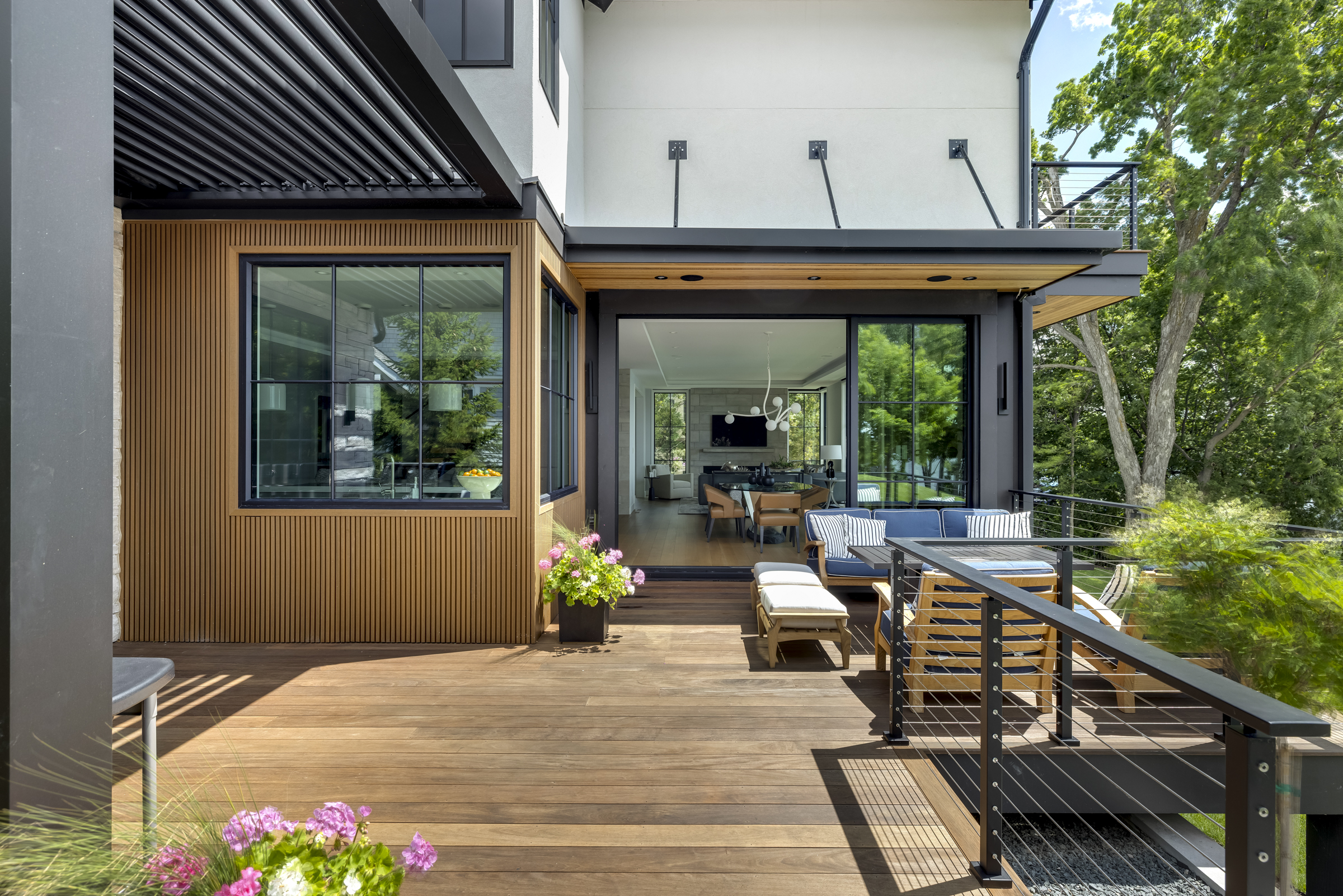
Some of the most telling craftsmanship in a custom home lives in the places most people never think to look at all: where flooring changes from wood to stone, where an interior wall meets an exterior one, where a screened porch gives way to an open deck. Stonewood’s trade partners treat these transitions with the same rigor given to a home’s signature features, because a clumsy transition is often the fastest way to remind someone, even subconsciously, that they’re standing inside a construction project rather than a home that has always belonged there.
Materials carry their own kind of honesty over time. A home that feels inevitable on move-in day has to keep feeling that way at year ten, and at year thirty. Stonewood selects and installs materials, wood, stone, siding, hardware, based on how they will wear over decades of Minnesota winters and summers, not simply how they photograph fresh out of the box. The goal is a house that settles into its site the way an old growth tree settles into a landscape, rather than one that visibly ages away from the vision it was built to fulfill.
And nothing breaks the feeling of an inevitable home faster than a mechanical system that announces itself, a vent placed in the wrong spot, a thermostat fighting the layout of a room, a corner that never quite holds a comfortable temperature no matter the season. Stonewood builds HVAC, plumbing, and electrical systems to serve a home’s intended feel rather than compromise it, so that comfort remains as unremarkable and constant as it should always be in a home built to this standard.
The Invisible Work Behind an Inevitable Home
What homeowners rarely see, and what Stonewood believes deserves far more credit than it typically gets, is how much of the work behind a truly successful custom home is invisible by nature. It’s the performance testing conducted throughout construction to catch small deviations before they become permanent parts of a home’s structure. It’s the multiple walkthroughs performed before occupancy, building a punch list not of dramatic problems but of tiny details most homeowners would never notice on their own, and fixing them anyway, because Stonewood knows that the accumulation of a hundred small oversights is exactly what separates a house that merely functions from one that feels genuinely right.
It’s the open, ongoing communication between project managers, trade partners, and homeowners that keeps a project honest to its original intention through every phase of construction, including the long, unglamorous phases that happen well after the exciting early design decisions have already been made and everyone’s attention has understandably started to drift elsewhere. This is the discipline that separates a builder like Stonewood from a construction company simply executing a checklist from start to finish. Anyone with the right crew and enough time can frame a house according to a set of plans. It takes genuine craftsmanship, and a genuine belief that the small things matter as much as the big ones, to make sure that what gets built matches, exactly, the feeling the home was always meant to have.
It also requires patience most homeowners don’t fully appreciate until they’re living inside the result. A rushed custom home almost always reveals itself eventually, in a floor that creaks where it shouldn’t, in a room that never quite feels balanced no matter how it’s furnished, in a hundred small compromises that quietly accumulate into a house that never fully becomes a home, no matter how much money or ambition went into it. Stonewood’s approach, refined over decades of building throughout the Lake Minnetonka corridor, treats that patience not as a cost of doing business but as the entire point of it. A home worth calling inevitable is never built in a hurry, and Stonewood has never been willing to treat speed as a substitute for rightness.
Why This Matters Even More in a Place Like Minnesota
Minnesota tests a home in ways that gentler climates never do, and that reality shapes almost everything about how Stonewood approaches a custom build. A house has to feel inevitable in July, when the lake is full of life and every door and window is thrown open to the summer air, and it has to feel just as inevitable in February, when those same rooms are sealed tight against the cold and lit only by the low, pale light of a winter afternoon. Few things expose a poorly built custom home faster than a Minnesota winter. And few things reward a well-built one more generously than a Minnesota summer, when a home that was built with real discipline seems to open itself effortlessly to the season.
Stonewood has spent decades building for that full range of conditions, homes throughout Wayzata, Deephaven, Orono, Minnetonka, and the broader Lake Minnetonka corridor that hold their sense of rightness in every season, not just the one used for the photography that eventually appears in a magazine spread or a portfolio page. It’s a standard that asks more of every trade on the job, more of every material selected, and more of the construction schedule itself, and it’s a standard Stonewood has never been willing to compromise, because a home that only feels inevitable in good weather was never really finished in the first place. A house that impresses for one season and quietly disappoints for the other eleven months isn’t a custom home in any meaningful sense. It’s a house that got the easy parts right and skipped the hard ones.

Stonewood’s Standard, Project After Project
This is the standard Stonewood carries into every custom home it builds, whether it’s a lakefront estate designed for entertaining at scale, a family home set back among mature trees and built for quiet, unhurried living, or a teardown-rebuild on a lot with decades of history already settled into the ground beneath it. The goal is never simply to finish the project on time and on budget, although both of those things matter enormously to the families Stonewood serves. The deeper goal, the one that shapes every decision along the way, is to build a home that, the moment it’s finished, feels like it couldn’t have been built any other way, on any other lot, for any other family.
That standard shows up in how Stonewood selects and manages trade partners, in the performance testing built into every phase of construction, and in the extensive warranty coverage that continues well past move-in day, because a home that feels inevitable on day one has to keep feeling that way on day one thousand, and on the thousandth day after that. It’s a harder promise to keep than it sounds, and it’s one Stonewood has spent nearly eight decades learning how to keep well, project after project, family after family, across the Lake Minnetonka corridor and the Twin Cities beyond it.
A custom home is one of the largest and most personal investments a family will ever make, and it deserves a builder who understands that the true measure of success isn’t how a home photographs the week it’s finished. It’s whether, years later, no one, not the family living in it, not a neighbor walking past, not a guest arriving for the first time, can quite picture the lot without it standing there. That is the standard Stonewood builds to on every project it takes on. Not a house that impresses on arrival, but a home that feels, from the very first walkthrough and every one after it, like it was always meant to be there.
- A sense of the feeling you want your finished home to have, not just the features you want it to include
- Photos or references of homes that feel settled and calm to you, not just visually impressive
- An honest account of how your family actually moves through a home, day to day and season to season
- Questions about how a builder handles the small, invisible details, transitions, tolerances, finish work
- A willingness to be patient through a process built for a result that’s meant to last decades
- An openness to a genuine partnership between you, your architect, and your builder
This is the standard Stonewood has quietly held itself to since 1947, not simply building beautiful custom homes, but building homes so carefully considered, so precisely fitted to their site and their family, that by the time they’re finished, they no longer look like anyone’s decision at all. They just look like they were always going to be there, and that, in the end, is the only compliment that has ever truly mattered to Stonewood.
Ready to Build a Home That Feels Like It Belongs?
Every Stonewood custom home begins with a conversation about the feeling you want your home to have, long before the first decision about finishes or floor plans. If you’re exploring a custom home anywhere along the Lake Minnetonka corridor, we would welcome the chance to walk your site and share what the Stonewood process looks like from the inside.
Let’s build the home that feels inevitable.