


Before You Move,
Let’s Talk
Most families don’t actually want to leave the house they love. They want the house to work. Before the for-sale sign goes in the yard, have the conversation that might save you the move entirely.
It rarely starts as a real decision. It starts as an escape hatch. The kitchen is too small for the life happening inside it. The primary suite hasn’t felt like a retreat in years. The mudroom is a losing battle against backpacks, boots, and hockey bags. The basement is a storage unit with carpet. And somewhere along the way, “maybe we should just move” starts to feel less like a fantasy and more like the only reasonable next step.
Here is what almost no one says out loud in that kitchen conversation: moving is not actually a solution. It’s a reset button. It trades one set of problems for a different, unfamiliar set, wrapped in a mortgage at a new interest rate, a new commute, a new school district to research, and a new house that will, in its own time, develop its own list of things that don’t quite work either. Revision by Stonewood exists for exactly this moment, the one right before the call to a realtor, when a family is trying to decide whether their house is the problem, or whether their house just needs someone who actually knows how to listen to it.

What Moving Actually Costs
Real estate agents will tell you what a house is worth. What they won’t always walk you through, at least not until you’re already deep into the process, is what it actually costs to leave one house and land in another. Closing costs on the sale. Closing costs on the purchase. Moving trucks. Storage units. A new roof inspection, because every “move-in ready” listing has a way of revealing its own list of surprises the moment you own it. Add it all together and the number is almost always larger than families expect, and often larger than the price of the remodel they were trying to avoid.
None of that accounts for the parts that don’t show up on a spreadsheet: the neighbors who became close friends, the walk to school the kids know by heart, the tree in the backyard that’s finally big enough to hang a swing from. A remodel keeps all of that intact while still solving the actual problem. That is the entire premise behind Revision by Stonewood, and it’s the conversation worth having before a single box gets packed.
Moving vs. Remodeling: A Side-by-Side Look
Every family’s math is different, and there are absolutely situations where moving is the right call, a job relocation, a school district that truly doesn’t fit, a neighborhood that no longer makes sense. But for the families who love their location and simply feel boxed in by their floor plan, the comparison usually looks something like this:
| Consideration | Moving | Remodeling with Revision by Stonewood |
|---|---|---|
| Location & community | Starts over, new neighbors, new routines | Stays exactly the same |
| Transaction costs | Agent commissions, closing costs on two sides | No commissions, funds go directly into the home |
| Timeline | Unpredictable, dependent on the market | Defined, mapped out from the first conversation |
| Control over outcome | Buying “close enough” to what you want | Building exactly what your family needs |
| Emotional cost | Leaving memories, routines, and a place you chose once already | Deepening the connection to the home you already love |
| Long-term value | Someone else’s remodel becomes your renovation project | A remodel built around how your family actually lives |
Laid out this way, the decision starts to look less like a toss-up and more like a question of information. Most families don’t choose to move because moving is genuinely better. They choose to move because no one has shown them what a well-run remodel actually looks like, start to finish, cost to timeline. That’s usually the first thing that changes once a family sits down with Revision by Stonewood.
Signs the House Isn’t the Problem
More often than not, the house a family is ready to leave isn’t actually broken. It’s misunderstood. A floor plan drawn for a different era, a different family, a different set of habits, still has good bones underneath the frustration. Here are the signs Revision by Stonewood sees most often in homes that didn’t need to be sold, they needed to be remodeled.
You love the location more than you dislike the layout
If the neighborhood, the school, the commute, and the lot are all still right, the floor plan is usually the only real obstacle, and floor plans can change.
The frustration is specific, not general
“The kitchen doesn’t work” and “everything about this house is wrong” are two very different problems. The first is almost always solvable with a remodel.
You’ve upgraded everything except the thing that actually bothers you
New paint, new light fixtures, a new couch, and the real issue, a cramped mudroom or a closed-off kitchen, is still sitting there untouched.
You keep saying “if only”
“If only the kitchen opened to the yard.” “If only the primary suite had its own bathroom.” Those are remodeling problems, not moving problems.
You’ve priced out new construction and quietly panicked
Building or buying comparable new construction in the same neighborhood is often more expensive, and slower, than remodeling the home you’re already in.
You haven’t actually talked to a remodeler yet
Many families move straight from frustration to a real estate listing without ever getting a real conversation about what a remodel could solve, and at what cost.
The Emotional Cost No Spreadsheet Captures
There’s a version of this conversation that stays purely financial, closing costs versus remodeling budget, and that version matters. But it misses something that every family who has actually gone through a move eventually names out loud: the quiet grief of leaving a house that holds your life in it. The doorframe with pencil marks tracking height over a decade. The porch where a dog spent fifteen summers. The room where a child took their first steps, learned to read, slammed a door as a teenager, and eventually packed their own boxes to leave for college.
None of that transfers to a new house. A new house comes with someone else’s memories baked into the walls, and it takes years, sometimes an entire childhood, to make new ones deep enough to replace what was left behind. Remodeling asks a fundamentally different question. Instead of “where do we go next,” it asks, “how do we make more room for the life we’re already building here.” For most families, once that question is actually on the table, the answer becomes obvious.
A Composite of Every Family Who’s Had This Conversation
No two remodels are identical, but the shape of the story tends to repeat itself across the Twin Cities in ways that are almost uncanny. A family buys a house in their early thirties, drawn in by the lot, the mature trees, the walkability to a school they’d chosen on purpose. They raise a child or two inside those walls. The house does its job for a decade, quietly, without complaint. Then, somewhere around year eleven or twelve, life simply outgrows the floor plan. A second child needs a bedroom that doesn’t exist yet. A work-from-home routine needs a door that closes. A kitchen built for a couple in their thirties is suddenly feeding four people, three schedules, and a dog, all at once, in seventy square feet that were never designed for it.
The family does what most families do first: they start touring open houses on weekend mornings, half out of curiosity, half out of genuine frustration. And almost every time, the same disappointment sets in. The homes with more space cost more than expected, often dramatically more once new construction pricing is factored in. The homes within budget don’t have the mature trees, the same walk to school, the same neighbors who’ve become close friends over a decade of block parties. Nothing quite measures up to what they already have, except for the one thing that’s actually broken.
This is usually the point where a neighbor, a friend, or a colleague mentions Revision by Stonewood, almost in passing. “Have you actually talked to a remodeler before you list?” It’s a question most families haven’t considered seriously, because moving has felt, for weeks or months, like the only path forward. But the first walkthrough tends to change the conversation entirely. A member of the Revision by Stonewood team walks the home, asks about daily routines rather than square footage, and starts identifying opportunities the family had never considered: a sunroom that could absorb into the kitchen footprint, a basement that could finally become the bedroom the family assumed they’d have to move to get, a mudroom sequence that could be completely reworked without touching the home’s exterior character at all.
By the time that first conversation ends, the math has usually shifted. What looked like an inevitable move starts to look like a remodel with a defined scope, a real budget, and a timeline the family can actually plan around. The for-sale sign never goes in the yard. The kids keep walking the same route to school. And a year later, the house that almost got sold because of one bad kitchen is the house the family can’t imagine ever leaving.
What Changes When the Right Question Gets Asked First
What’s striking, across nearly every version of this story Revision by Stonewood has been part of, is how little actually needed to change for the outcome to shift from “let’s move” to “let’s remodel.” It was rarely about the family discovering some hidden option no one else had thought of. It was almost always about someone finally sitting down with them and asking the more useful question before the real estate search had gone too far to reverse: is this actually a house problem, or is this a floor plan problem wearing a house problem’s clothes?
That distinction is the entire reason this conversation matters enough to build a company philosophy around. A remodel can’t fix a genuine mismatch, a family that’s outgrown a neighborhood, a commute that’s become unworkable, a lot that’s simply too small for what’s needed. But it can fix almost everything else, and “almost everything else” describes the overwhelming majority of families who end up standing in a kitchen at night, quietly wondering if it’s time to call a realtor. Before that call gets made, Revision by Stonewood believes it’s worth making a different one first.
What a Revision by Stonewood Remodel Can Actually Solve
Every family arrives at that late-night kitchen conversation with a slightly different list, but the categories tend to repeat themselves across hundreds of remodels. Here is what a well-planned remodel is typically capable of resolving, without ever leaving the neighborhood.
The Kitchen That Fights the Family
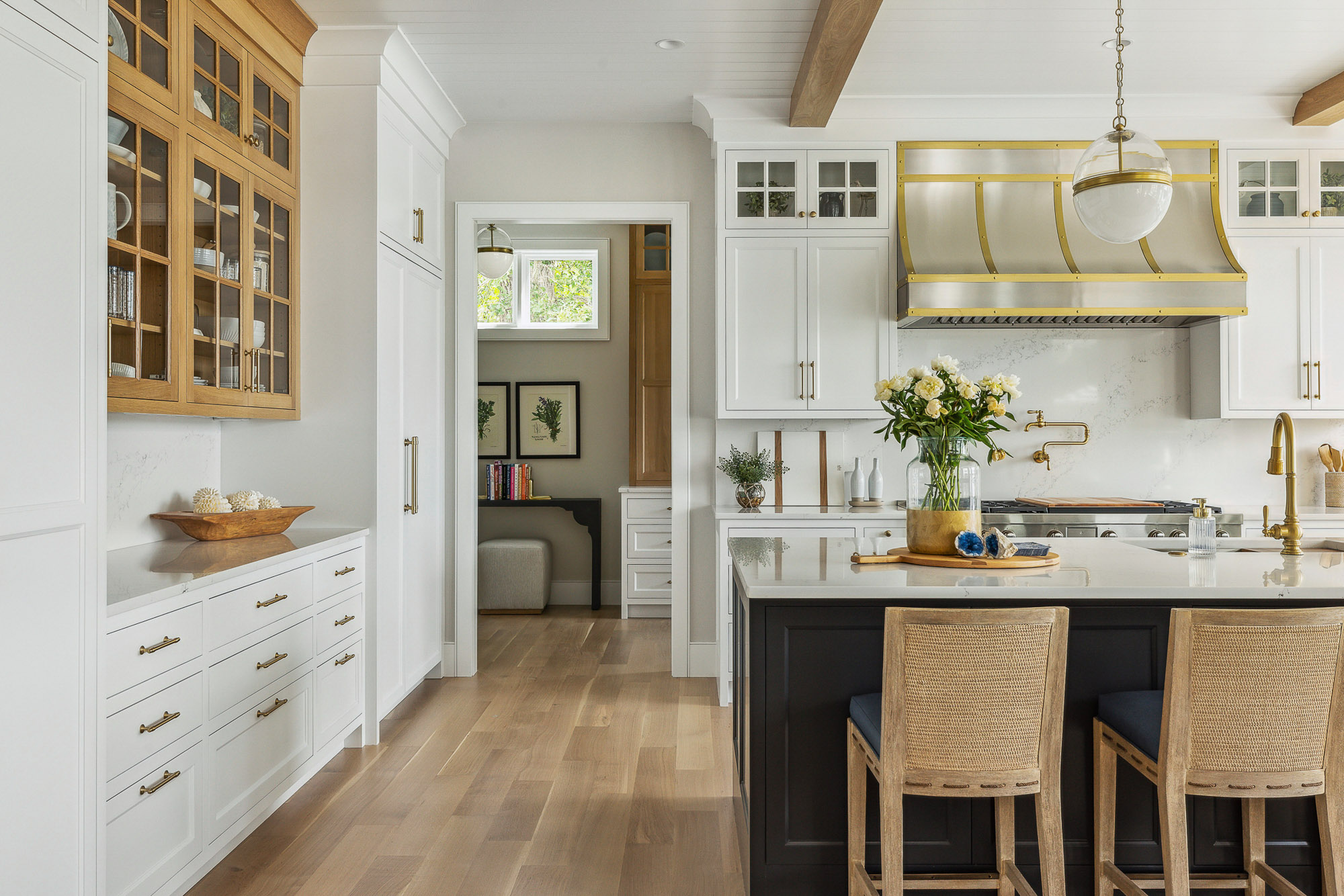
Closed-off, undersized, or awkwardly positioned kitchens are one of the single most common reasons families start browsing listings. A remodel can open sightlines, reposition the workflow, and turn the kitchen back into the center of the house it was always meant to be.
The Primary Suite That Never Feels Like a Retreat
A primary bedroom squeezed in as an afterthought, without a proper bathroom or closet, is a remodel problem, not a moving problem. Revision by Stonewood has reworked entire second-floor layouts to finally give a primary suite room to breathe.
The Entry That Turns Into Chaos
A mudroom that can’t keep up with a real family, boots, backpacks, sports gear, the dog, is one of the fastest wins in a remodel. Reworking entry sequencing changes the entire rhythm of a household’s daily routine.
The Basement Doing Nothing
An unfinished or underused basement often represents the single largest untapped square footage in a home, and finishing it is almost always less expensive than buying that same square footage somewhere new.
The House That Simply Feels Small
Sometimes it isn’t one room, it’s the whole footprint. A thoughtfully designed addition can add the square footage a growing family needs while keeping the architecture, and the neighborhood, exactly the same.

A Conversation Before a Contract
Revision by Stonewood built its process around a simple belief: no family should have to guess whether remodeling makes sense before they’ve actually talked to someone who remodels for a living. That’s why the first meeting isn’t a sales pitch. It’s an honest conversation about what’s working in the house, what isn’t, and whether a remodel can realistically close that gap within a budget the family is comfortable with.
Sometimes that conversation confirms that moving really is the right call, a job change, a school district that no longer fits, a lot that’s simply too small for what the family needs. Revision by Stonewood will say so plainly, because a remodeling company that only ever recommends remodeling isn’t actually giving good advice. But far more often, that first conversation uncovers something the family hadn’t fully considered: a remodel that solves the real problem, on their own lot, in the neighborhood they already love, for less than the true cost of moving.
- What specifically isn’t working in the current house, room by room
- Whether those problems are solvable within your realistic budget
- A rough sense of scope, timeline, and investment before any drawings begin
- An honest opinion on whether remodeling or moving makes more sense for your situation
- What it would look like to live in the home during a remodel, if that’s a concern
Questions Families Ask Before They Commit to a Remodel
Is remodeling really cheaper than moving?
It depends on the scope, but in many Twin Cities markets, a well-planned remodel costs less than the combined transaction costs of selling one home and buying another, especially once agent commissions, closing costs, and moving expenses are factored in. Revision by Stonewood walks every family through real numbers before any decision is made.
Can we live in the house during a remodel?
Often, yes, depending on the scope of the project. Some remodels are staged specifically to keep a family in place, while larger, whole-home remodels may call for a temporary move. This is one of the first things discussed in the initial conversation with Revision by Stonewood, so there are no surprises later.
How do we know if our house is a good candidate for a remodel?
Almost any home with good bones, a solid foundation, a structure worth building on, is a good candidate. The better question is usually whether the specific frustrations are things a remodel can solve. That’s exactly what the first walkthrough with Revision by Stonewood is designed to answer.
What if we remodel and still want to move someday?
A thoughtful remodel almost always increases a home’s value and its appeal to future buyers, so it isn’t a decision made at the expense of resale. It’s simply choosing to enjoy the improvement now instead of leaving it for whoever buys the house next.
How long does a typical remodel take?
Timelines vary by scope, a single kitchen remodel moves faster than a whole-home renovation or an addition, but every Revision by Stonewood project starts with a clear, honest timeline before construction begins, not a vague estimate that shifts as the project goes.

The Conversation Worth Having First
Nobody falls in love with a neighborhood, a lot, a set of trees, or a walk to school and then wants to give it up over a kitchen island that’s twelve inches too small. And yet, every year, families across the Twin Cities do exactly that, not because moving was truly the better option, but because no one ever sat down with them and asked the more useful question first: what if the house you already love just needs the right remodel?
That is the conversation Revision by Stonewood exists to have. Not a sales conversation. Not a pitch. A genuine, honest look at whether the frustration driving a family toward a for-sale sign is actually a remodeling problem in disguise. More often than families expect, it is. And when it is, the result isn’t just a renovated house. It’s the same home, the same neighborhood, the same life, finally working the way it was always supposed to.
Because in the end, the goal was never to convince a family to stay somewhere that doesn’t work for them. The goal is to make sure they never have to leave somewhere that does, simply because no one showed them what a remodel could do first. That is the standard behind every Revision by Stonewood remodel, and it starts with a single conversation, before a single box gets packed.
Before You List the House, Let’s Talk
If your family is weighing a move because the house isn’t working the way it used to, let’s have the conversation first. Revision by Stonewood will walk your home with you, listen to what’s actually frustrating you, and give you an honest read on whether a remodel could solve it, on your own lot, in the neighborhood you already love.
Let’s talk about what’s possible, before you ever call a realtor.