

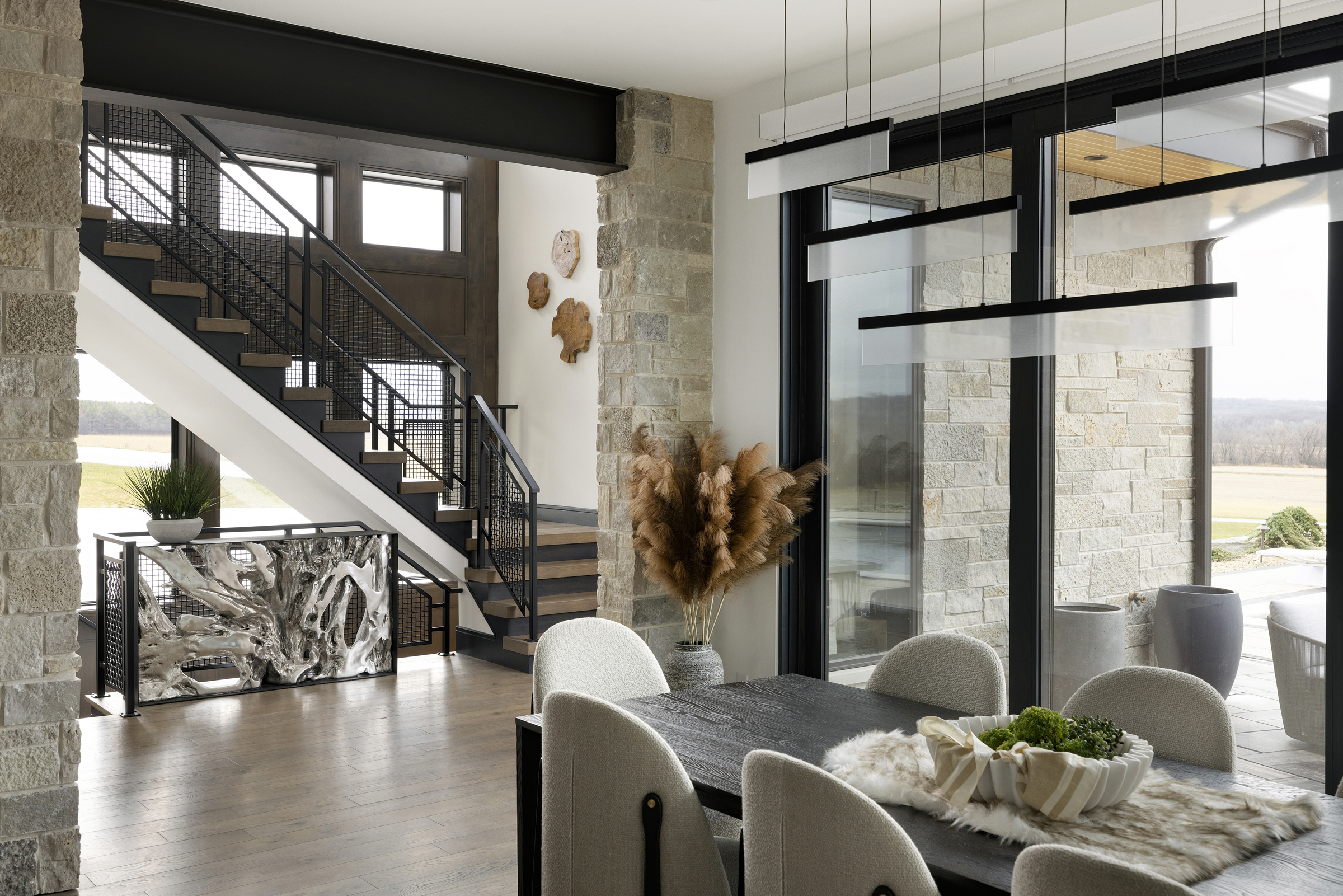
The Quiet Kind of Luxury
Nothing Squeaks. Nothing Settles. Nothing Feels Accidental.
Walk through enough homes, custom and otherwise, and a pattern starts to emerge. Some houses are loud about their luxury. They lead with the chandelier, the waterfall island, the twenty-foot wall of glass, and there’s nothing wrong with any of that on its own. But spend a little more time in those same homes, six months, a year, five years in, and a different kind of house starts to reveal itself underneath the showpieces. A stair tread that has started to complain underfoot. A door that no longer sits quite right in its frame. A room that never got the memo about staying warm on a January night. The luxury was there on day one. It just wasn’t built to stay.
Then there’s the other kind of house. The one where nothing shouts, and nothing has to. Stonewood has spent nearly eight decades building that second kind of house, the kind where luxury isn’t a finish or a feature at all, but a behavior, a house that simply performs, quietly and completely, in every room, in every season, for as long as a family lives in it. This is the quiet kind of luxury. Nothing squeaks. Nothing settles unevenly. Nothing, anywhere in the home, ever feels like it happened by accident.
It is, in Stonewood’s experience, the hardest kind of luxury to build, and the only kind that actually holds up.
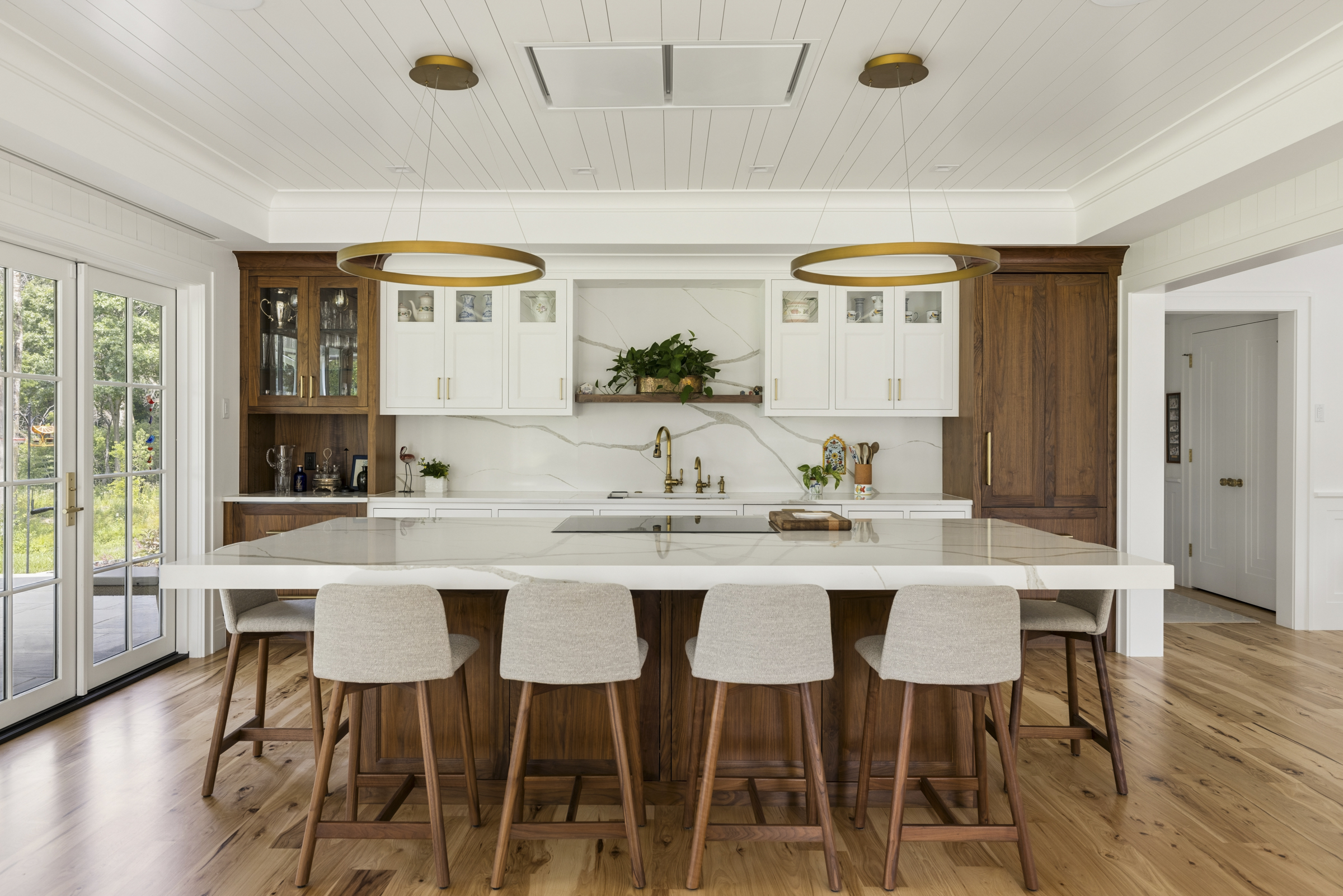
Luxury That Performs Instead of Luxury That Poses
There is an important distinction between a home that looks luxurious in a photograph and a home that behaves luxuriously in daily life, and it’s a distinction the custom home industry doesn’t talk about nearly enough. A photograph can’t tell you whether a floor will still be silent under bare feet at two in the morning. It can’t tell you whether a window seal will hold through a decade of Minnesota freeze-thaw cycles, or whether a kitchen drawer will still glide as smoothly on its two-hundredth use as it did on its first. Those things only reveal themselves over time, in the ordinary, unglamorous friction of actually living in a house.
Stonewood has always measured luxury by that second standard, not the first. A truly luxurious home, in Stonewood’s view, is one where every mechanical, structural, and finish decision was made with an entire lifetime of use in mind, not just the week the photographer comes through. It means specifying hardware that’s rated to be opened and closed tens of thousands of times without loosening. It means framing floors to a tolerance tight enough that a squeak never has the opportunity to develop in the first place, rather than trying to fix one after the fact. It means installing HVAC systems sized and zoned precisely enough that no room in the house ever becomes the one everyone avoids in February or dreads in July.
None of this is visible in a listing photo. Almost none of it makes for an exciting conversation during a design meeting, when most homeowners are, understandably, far more focused on cabinet finishes and countertop selections than on tolerance specifications for door hardware. But it’s exactly this invisible layer of decision-making, made correctly and consistently across thousands of individual choices, that separates a home that merely looks expensive from one that actually feels like it, every single day someone lives inside it.
The Sound a House Isn’t Supposed to Make
Ask any homeowner what bothers them most about a home that isn’t quite right, and the answer is rarely dramatic. It’s almost never a leak or a crack or a visible structural problem. It’s smaller than that, and stranger. It’s the stair that creaks on the fourth step every single time, no matter how carefully you step. It’s the door that used to close silently and now needs a slightly harder push than it should. It’s the floor, somewhere in an otherwise beautiful kitchen, that has developed a soft, hollow sound underfoot that no one can quite explain.
These sounds are not cosmetic annoyances. They are the audible evidence of decisions made poorly somewhere earlier in the construction process, subfloor fastened with too much spacing, framing lumber that wasn’t given time to properly acclimate before finish work began, a transition detail that was rushed to keep a schedule on track. Stonewood treats the near-total absence of these sounds as one of the clearest, most honest measures of a home’s true construction quality, precisely because it’s a measure that can’t be faked with a beautiful finish or an impressive fixture. A house either performs silently, or it doesn’t. There’s no design trick that can cover for a subfloor that wasn’t fastened correctly the first time.
This is why Stonewood’s construction teams pay as much attention to subfloor fastening schedules and lumber moisture content as they do to the visible finish carpentry a homeowner will actually see and touch every day. A silent house is not an accident. It is the accumulated result of a construction team that understood, from the very first framing decision, that luxury isn’t only what a home looks like. It’s what a home sounds like, or rather, what it doesn’t.

Nothing Settles: Building for the Ground a Home Actually Sits On
Settling is one of those words homeowners use casually, a little settling is normal, they’ll say, and in some limited sense, that’s true. Every home moves slightly as it adjusts to its foundation in the first year or two. But there’s a significant difference between the small, expected settling of a well-engineered structure and the ongoing, worsening settling of a home that was built without adequate attention to soil conditions, footing depth, or drainage in the first place. One stabilizes and disappears. The other becomes a slow, expensive, and often structural problem that follows a family for as long as they own the home.
Minnesota’s soil conditions vary enormously across the Lake Minnetonka corridor, from dense clay to sandy fill to the unpredictable, layered ground often found near shoreline lots. Stonewood treats soil testing and foundation engineering not as a formality to satisfy a permitting office, but as one of the single most important phases of the entire build, because a home that isn’t engineered correctly for the ground beneath it will eventually reveal that mistake, whether in a hairline crack in a foundation wall, a door that no longer closes squarely, or a floor that develops an almost imperceptible slope over a few short years.
Getting this right requires patience most homeowners never see, because it happens entirely below grade, months before a single visible wall goes up. Proper footing depth. Correctly engineered drainage away from the foundation. Soil compaction verified rather than assumed. These decisions cost real time and real attention long before there’s anything to show a homeowner during a site walk. But they are precisely what allows a Stonewood home to still sit level, still close its doors squarely, and still feel exactly as solid at year twenty as it did the week construction finished. Nothing about that solidity is visible. All of it is foundational, in the most literal sense of the word.
Nothing Feels Accidental: The Discipline of Intention in Every Detail
The third quality of a truly quiet luxury home is the hardest to name, and the easiest to feel the absence of. It’s the sense, walking through a finished home, that every single decision, down to the smallest detail, was made on purpose. Not a single outlet placed slightly off-center by accident. Not a single trim reveal that’s a sixteenth of an inch wider on one wall than the next. Not a single transition between materials that happened because a crew ran out of time rather than because it was the right call.
This kind of consistency is exhausting to achieve and almost impossible to notice when it’s done correctly, which is precisely the point. A homeowner walking through a Stonewood home rarely thinks consciously about whether every baseboard reveal matches or whether every door swings with identical resistance. They simply feel, without being able to say exactly why, that the house is calm. That nothing is fighting them. That every room they enter behaves exactly the way the last one did, and the one before that. That consistency, replicated across dozens of rooms and hundreds of individual construction decisions, is what separates a home that feels genuinely luxurious from one that merely photographs that way.
Stonewood builds toward that consistency through a level of on-site oversight that goes well beyond what most construction companies consider standard. Detailed walkthroughs at multiple stages of construction. Punch lists built not around dramatic problems but around the smallest inconsistencies, a slightly uneven reveal, a hardware finish that doesn’t quite match its neighbor, a transition that’s a fraction of a degree off from level. None of these things would necessarily be visible to an untrained eye. All of them, left unaddressed, would eventually accumulate into a home that feels subtly, unexplainably less considered than it should. Stonewood has never been willing to let that accumulation happen, on any project, regardless of how small any individual detail might seem in isolation.
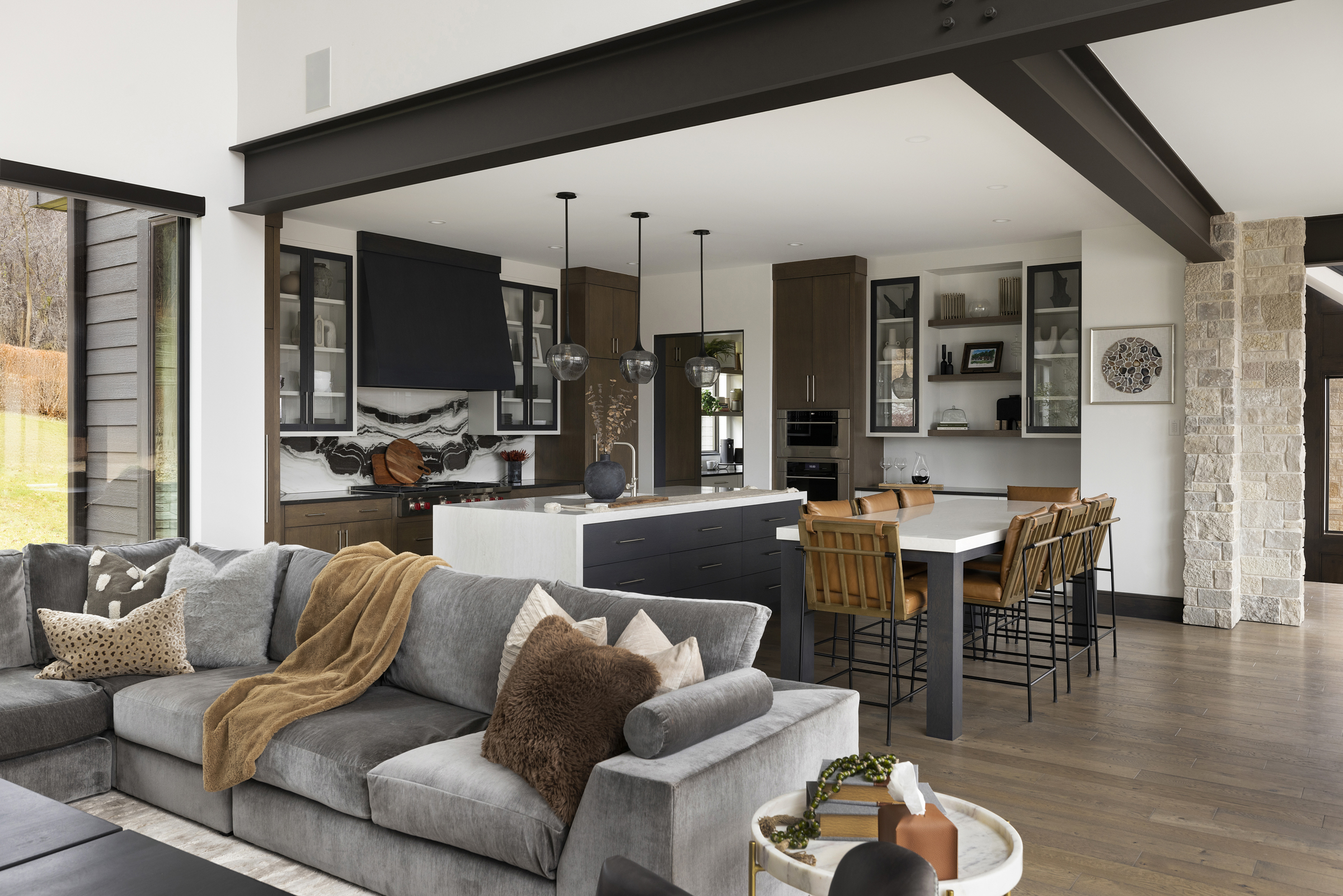
Why Quiet Luxury Is the Standard, Not the Exception, at Stonewood
Loud luxury is, in a certain sense, the easier product to sell. It photographs well immediately. It impresses at a first showing. It gives a homeowner something dramatic to point to when friends and family come through for the first time. Stonewood understands the appeal, and nothing about building quietly means building plainly, many Stonewood homes are every bit as visually striking as anything built anywhere else in the Lake Minnetonka corridor. But Stonewood has never believed that visual drama and lasting quality need to compete with one another, and every project is built on the conviction that the two should always coexist.
What Stonewood refuses to do is let the visible, photograph-ready decisions come at the expense of the invisible ones. A stunning kitchen built on a subfloor that wasn’t properly fastened is not, by Stonewood’s standard, a luxury kitchen. A dramatic great room with mechanical systems that leave one corner uncomfortably cold every winter is not, by Stonewood’s standard, a luxurious room. True luxury, the kind that actually holds up to a family’s daily life for decades, requires both halves of the equation: the visible craftsmanship a homeowner falls in love with during a walkthrough, and the invisible discipline that ensures that love affair doesn’t fade the first time winter arrives.
This is the standard Stonewood has quietly held itself to since 1947, across homes throughout Wayzata, Deephaven, Orono, Minnetonka, and the broader Lake Minnetonka corridor. Not the loudest luxury on the block. The kind that’s still there, still silent, still perfectly level, and still exactly as considered, twenty years after the last homeowner walkthrough.
- How do you approach soil testing and foundation engineering before construction begins
- What tolerances do you hold for framing, subfloor fastening, and door and window installation
- How many walkthroughs and punch lists happen before a home is considered finished
- How are trade partners selected, and how long have they worked with your team
- What kind of warranty coverage continues after move-in, and how are issues actually resolved
- Can you show me a home you built more than ten years ago that still performs the way it did on day one
That last question is, in many ways, the only one that truly matters. Any builder can make a home look extraordinary for the week the photographer comes through. Very few can guarantee it will still feel that way a decade later, when the excitement of move-in day has long since faded into the quiet, daily reality of simply living in the house. Stonewood has spent nearly eight decades building toward that second standard, because it’s the only one that actually reflects what a family experiences, year after year, in the home they chose to build.
The quiet kind of luxury doesn’t ask to be noticed. It asks to be trusted, silently, every single day, in every single room. That is the standard Stonewood builds to on every custom home it takes on, and it is the reason a Stonewood home tends to feel, even decades after it’s finished, exactly as considered as the day the last homeowner walkthrough was completed.
Ready to Build the Quiet Kind of Luxury?
Every Stonewood custom home is built on the belief that true luxury is invisible, a foundation engineered correctly, a floor that never squeaks, a room that behaves exactly as it should in every season. If you’re exploring a custom home anywhere along the Lake Minnetonka corridor, we would welcome the chance to walk your site and share what the Stonewood standard actually looks like, above and below the surface.
Let’s build the home that never has to raise its voice.