

Stonewood Custom Homes: Design Philosophy
The Art of the Design Conversation:
How Great Custom Homes Take Shape
The blueprint is only the beginning. The homes that endure are born in dialogue: between client, architect, and builder.
The renderings look stunning. The floor plan seems perfect. You’re ready to break ground. But here’s what blueprints can’t show you: the hundreds of decisions yet to be made. Decisions about how morning light will enter your kitchen. Which way a door swings so it doesn’t interrupt the rhythm of the room. Where, exactly, life actually happens, and how your home should be designed to meet it there.
Great custom homes aren’t designed in a single burst of inspiration. They emerge through conversation, a deliberate, evolving dialogue between you, your architect, and your builder that refines vision into livable reality over months of thoughtful exchange. At Stonewood Custom Homes, we’ve spent decades building in Minnesota’s demanding climate, and our deepest belief is this: the design conversation isn’t a phase to rush through. It’s where the magic happens. It’s where a house becomes your home.
Today, we’re pulling back the curtain on how that conversation unfolds, and why the builder you choose to sit at that table matters just as much as the architect whose name is on the drawings.
The Three-Way Partnership at the Heart of Every Home
Custom home design involves three distinct voices, and every one of them is essential. When all three are present, engaged, and genuinely listening to each other, extraordinary things happen. When even one is absent or sidelined, the results quietly suffer for it.
You, the Client
You know how you live: your routines, your frustrations with every previous home, your unspoken sense of what it means to feel at rest in a space. That knowledge is irreplaceable and no one else in the room has it.
The Architect
The architect translates lived experience into space, form, and light. They understand proportion, flow, and how to create rooms that feel right before you can say exactly why. They show you possibilities you hadn’t imagined.
The Builder
The builder knows what works. They’ve watched hundreds of designs become real structures, seen what performs over decades in Minnesota winters, and understand where architectural ambition needs thoughtful, practical grounding.
When these three perspectives combine effectively, early, often, and with genuine mutual respect, the results transcend what any one perspective could produce alone. When they don’t, when the builder arrives too late, when the client’s voice gets swept up in design enthusiasm, when the architect works in creative isolation, the process becomes more expensive, more frustrating, and ultimately less satisfying than it should be.
The best designs emerge when everyone brings their expertise to the table early and often. No single perspective holds all the answers, and the homes that endure are built on the sum of all three.
Stonewood Philosophy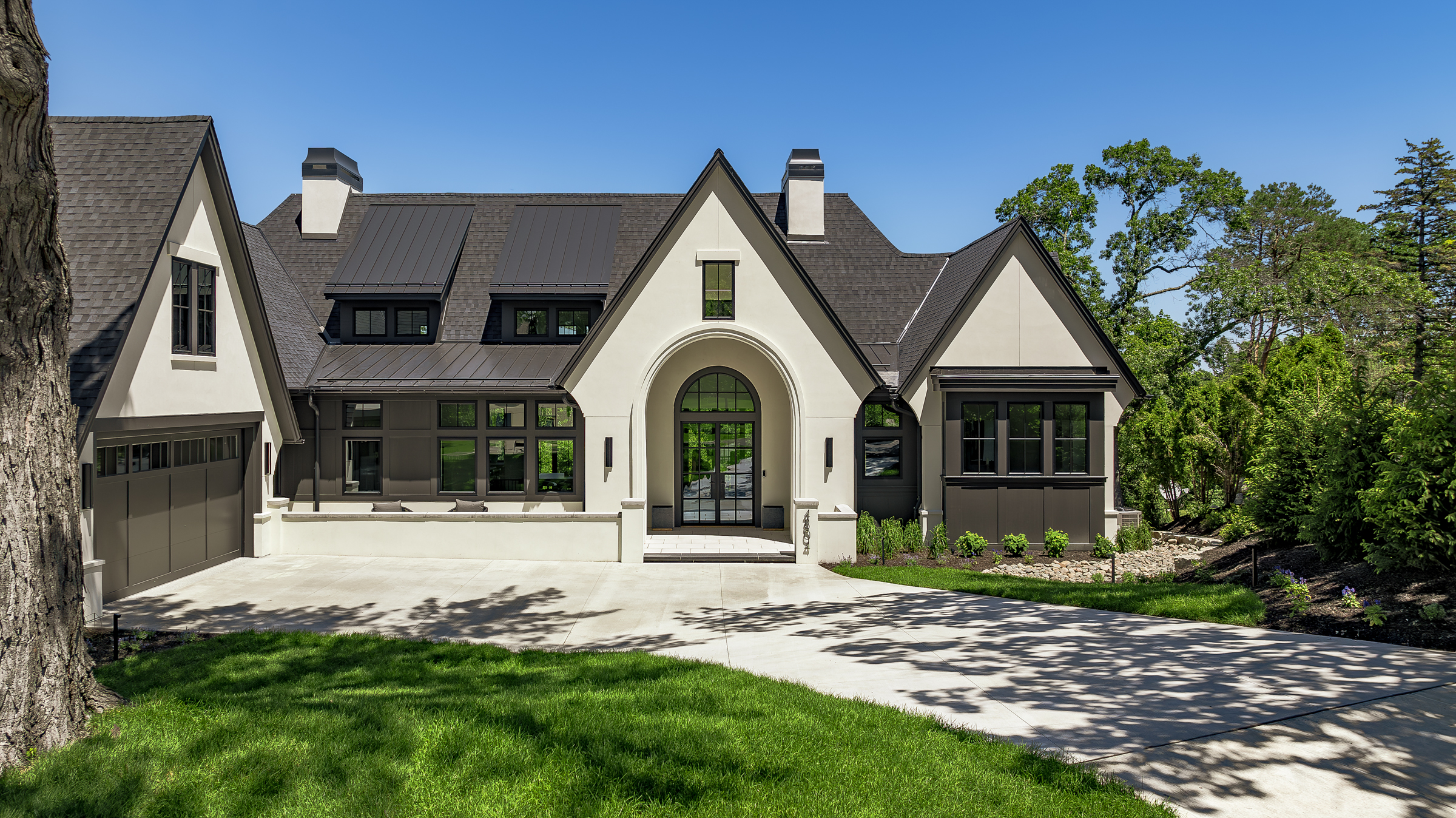
A Stonewood custom home in the Twin Cities, where months of design conversation become decades of lived experience.
Why Early Builder Involvement Changes Everything
Many clients assume the process is linear: hire an architect, produce a set of perfect plans, then bring in a builder to execute them. It’s a logical assumption. It’s also one that consistently leads to frustration, budget overruns, and the particular sting of discovering, too late to change without significant cost, that a decision made on paper doesn’t translate to real life.
Architects design in possibility. That’s their great gift. But some possibilities cost three times what alternatives would cost to achieve the same experience. Some elegant solutions don’t account for how Minnesota’s climate will test them through forty years of freeze-thaw cycles. Some beautiful roof lines create maintenance realities that photograph better than they live.
When Stonewood joins the design conversation early, during the conceptual phase, before working drawings are complete, we can add practical perspective while changing course is still effortless and free:
- “That roofline is stunning. Have you considered how it will handle snow load through a Minnesota winter?”
- “This window configuration is absolutely achievable, but here’s an alternative that delivers the same quality of light for significantly less cost.”
- “We detailed this exact feature last year. Here’s what we learned that would make it perform even better.”
This isn’t about limiting architectural vision. It’s about channeling that vision into solutions that will perform as beautifully as they look, not just on move-in day, but for the decades of Minnesota living ahead.
A builder who engages substantively in design discussions, asking not just what you want but why you want it, will consistently help you arrive at better answers than one who simply waits to receive finished plans. At Stonewood, we’ve earned our seat at the design table by proving, project after project, that builder insight applied early creates homes that serve their owners better over time.
The Discovery Phase: Learning How You Actually Live
Every design conversation at Stonewood begins not with drawings, but with listening. Before pencil touches paper, we need to understand how you actually live, not how shelter magazines suggest you should live, but the real, honest truth about the patterns of your days.
The Questions That Matter Most
The questions Stonewood asks might surprise you. They’re not architectural questions. They’re life questions, and the answers reveal what your home needs to accomplish in ways that square footage and room labels can’t capture:
- What time do you wake up, and what’s the first thing you do?
- When you’re cooking, do you want visibility into the family room, or do you want focus and separation?
- Where do backpacks, keys, and mail actually land when you walk in the door?
- What’s your single biggest frustration with the home you’re living in right now?
- If you could go back and change one thing about the last home you built, what would it be?
Listening for What Isn’t Said
Some of the most important insights come from what clients don’t say. Couples often hold different priorities they haven’t fully worked through together. One person mentions the home office repeatedly; the other keeps circling back to outdoor entertaining and the kitchen. These differences aren’t conflicts waiting to happen. They’re design opportunities that need acknowledgment before they become friction.
Stonewood’s team has learned to listen for hesitation, for quick changes of subject, for the features described with genuine excitement versus polite obligation. These signals help us understand not just what you say you want, but what will actually make you happy when you’re living in this home five years from now.
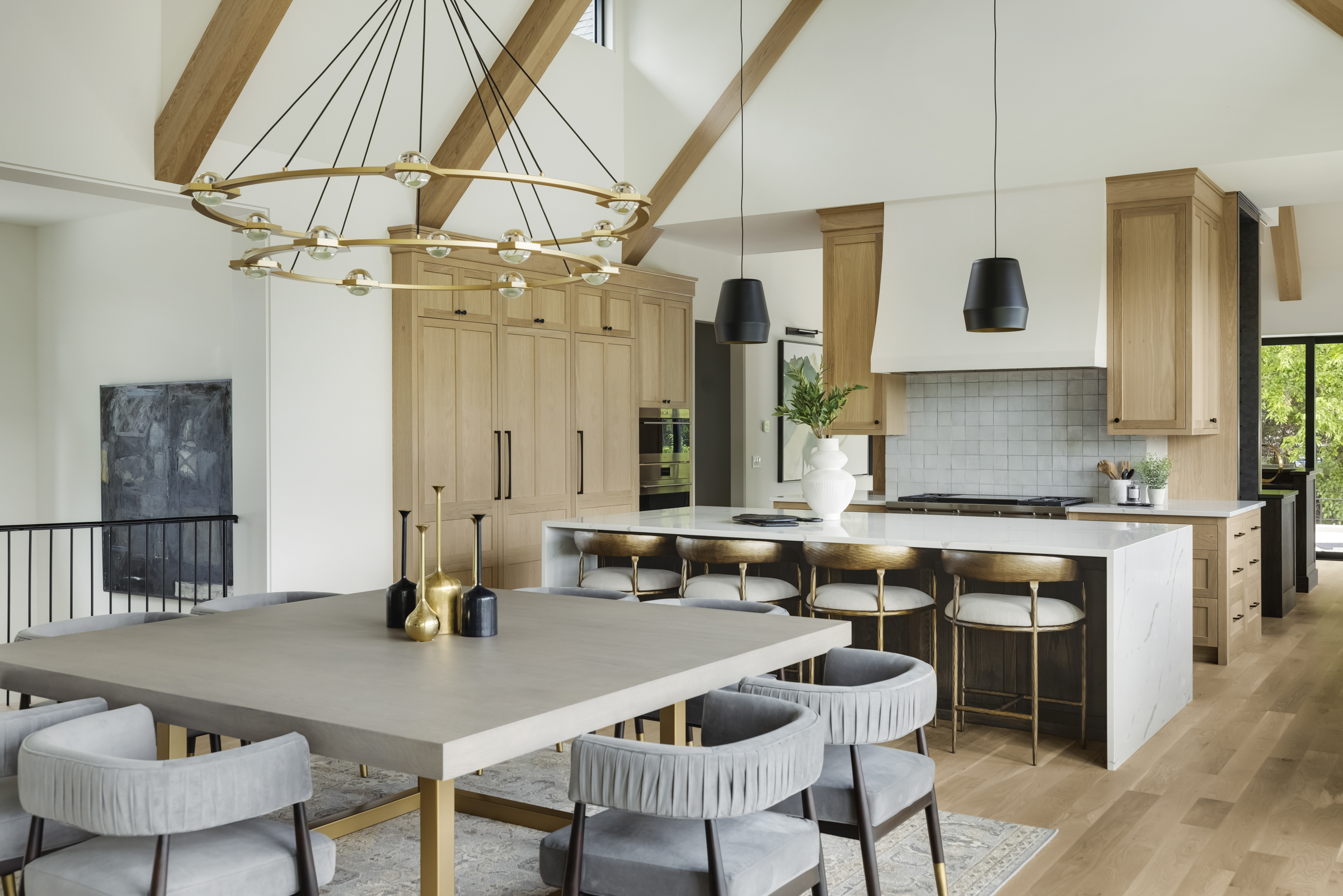
Where the design conversation becomes architecture: a Stonewood kitchen shaped by real life, not just real estate photography.
From Vision to Options
After discovery, the design conversation becomes iterative. Ideas take shape, get questioned, evolve, and either strengthen or give way to something better. This is the phase most clients find both exhilarating and surprisingly productive, because when the conversation is functioning as it should, the ideas that emerge are consistently better than what anyone brought to the table alone.
The Sketch Phase
Early design work at Stonewood is deliberately loose. Quick sketches and rough floor plans let everyone explore multiple directions without the weight of commitment. Everything is changeable. Moving a wall costs nothing. Reconsidering an entire layout costs nothing. We encourage clients to live with sketches before committing to detailed development: put them on your refrigerator, look at them over morning coffee, walk through them mentally as you move through your current days. The sketches that still feel right after two weeks are worth developing further.
The “What If” Game
Good design conversations include generous amounts of “what if,” questions that challenge assumptions and consistently lead to breakthrough solutions:
- What if the kitchen faced east instead of south?
- What if the mudroom was positioned where you actually enter the house, not where it’s architecturally convenient?
- What if we prioritized one truly spectacular bathroom over two merely good ones?
- What if the primary suite was on the main floor, not the second?
The idea that initially seemed obvious sometimes gives way to an approach that fits your life far better. The willingness to ask “what if” is one of the distinguishing characteristics of Stonewood’s design process, because we’ve seen, hundreds of times, that the best answer rarely arrives first.
The Trade-Off Discussions
Every home involves trade-offs. Budget realities, site constraints, and competing priorities mean that informed choices must be made. At Stonewood, we believe that transparent, early trade-off conversations are among the most valuable things we offer. If a feature you love will meaningfully impact budget, you should know that before it becomes an expectation, so you can make an intentional decision: pursue it, modify it, or redirect those resources toward something that matters more. Informed decisions are good decisions, even when they’re difficult ones.
The Value of Early Collaboration
Industry data consistently shows that design changes made during the conceptual phase cost roughly 1% of what the same changes cost once construction is underway. The design conversation isn’t a luxury. It’s the most financially protective investment you can make in your custom home project.
The Details Phase: Where Custom Truly Separates from Standard
Once the primary decisions are made, layout, flow, proportions, orientation, the design conversation shifts to the details. This is where a custom home built by Stonewood distinguishes itself most clearly from production construction. Because in a truly custom home, the details are never afterthoughts.
Material Conversations
Selecting materials is genuinely more complex than choosing from catalogs. How does a countertop look in morning light versus evening? How will a floor feel under bare feet in February? Will this exterior stone weather gracefully over decades of Minnesota winters, or will it stain, pit, and quietly disappoint? Stonewood brings samples into real conditions. We show materials in completed homes where clients can see them in context, not under showroom lighting, but living in the world.
Hardware and Fixture Discussions
The objects you touch every day matter enormously. Door hardware, faucets, cabinet pulls: these aren’t secondary decisions. They’re tactile experiences that delight or quietly disappoint you thousands of times over the life of your home. Stonewood maintains longstanding relationships with suppliers across the quality spectrum and guides clients toward fixtures that match both aesthetic vision and real-world daily use expectations.
The Finish Schedule
Every room requires dozens of coordinated decisions: paint colors, tile selections, wood stains, grout, lighting fixtures. Maintaining coherence across these choices and ensuring that everything in your home feels like it belongs together requires both artistic sensibility and rigorous organizational discipline. Stonewood’s design team helps clients navigate these decisions efficiently, grouping related choices and maintaining a running finish schedule that keeps the entire vision coherent from room to room, floor to floor.
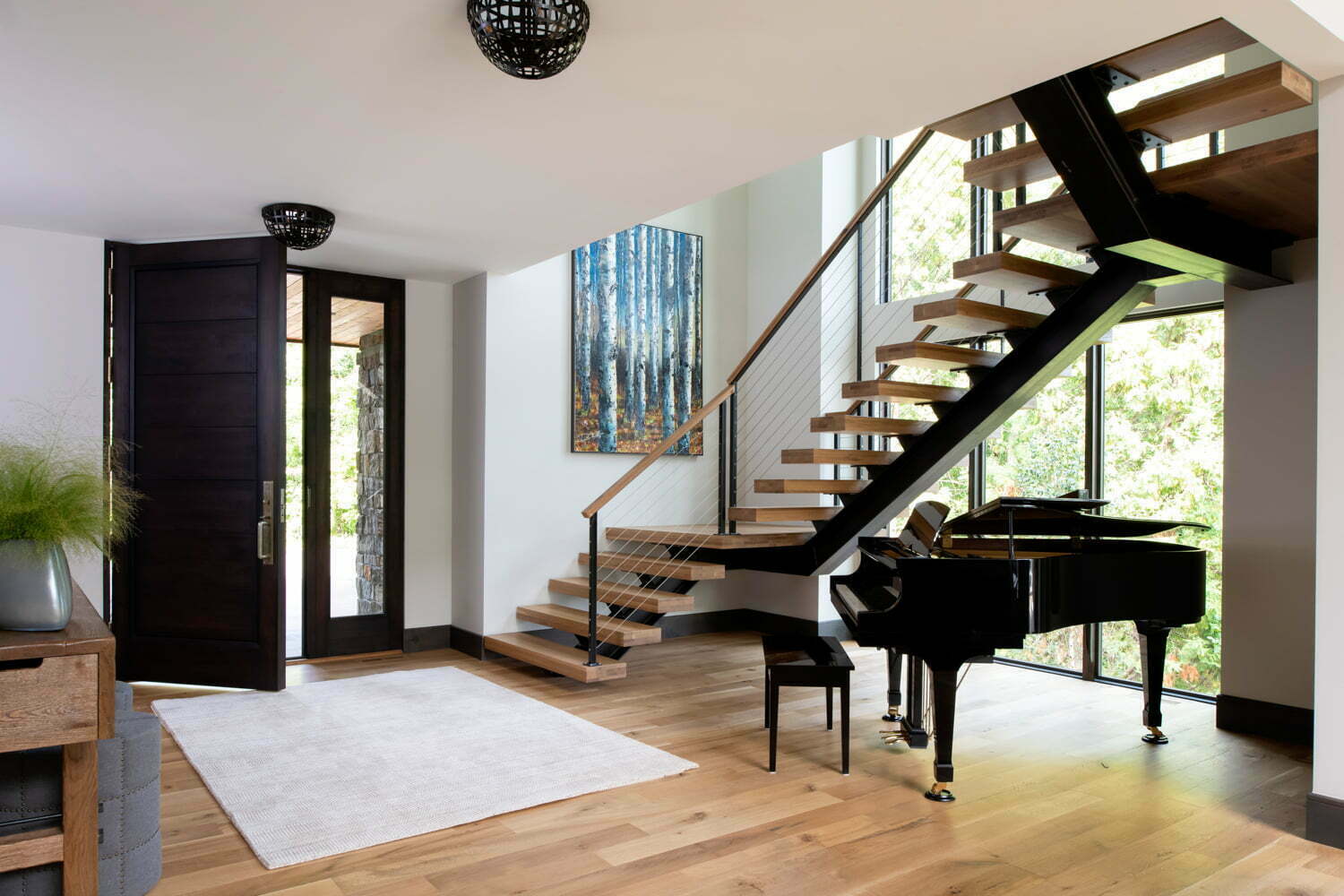
The details that define daily life: Stonewood’s commitment to quality extends to every surface you touch.
The Craft Conversation Doesn’t End at Groundbreaking
Here is something many clients don’t expect: the design conversation continues long after construction begins. As your home takes physical form, new insights emerge. Spaces that existed only on paper become real, and reality has a way of revealing both confirming truths and productive opportunities.
Mock-Ups and Walk-Throughs
When framing is complete, Stonewood invites clients to walk through their emerging home. Sometimes this confirms every decision that was made on paper. Sometimes it reveals that a window should shift six inches to capture a view better, or that a door swing should reverse to improve the natural flow of movement through a room. We build mock-ups of key elements, cabinet heights, fireplace proportions, shower configurations, so clients can experience them in three dimensions before final installation. Adjusting a mock-up is trivial. Adjusting completed work is not.
Change Orders That Add Value
Stonewood doesn’t treat change orders as a profit center. When a client discovers something during construction that would genuinely improve their home, we want them to feel free to raise it. Some changes are impractical or costly, and we’ll say so honestly. But many are simple adjustments that make real differences in how a family will live in a home for the next thirty years. The best change orders come from the deepened understanding that emerges when you can actually stand in your spaces, and that understanding is always worth responding to.
A custom home builder who shuts down the conversation at groundbreaking is leaving value on the table, yours and theirs. Stonewood remains in active dialogue with clients throughout construction because we believe the lived experience of inhabiting a space as it forms is itself a form of design intelligence that no blueprint fully captures.
The Most Important Skill in the Room
Throughout this entire process, discovery, iteration, detailing, construction, the most important skill in the room isn’t technical knowledge or creative vision. It’s listening. Genuine, patient, curious listening.
The architect listens to understand your vision. The builder listens to anticipate challenges and opportunities. You listen to possibilities you hadn’t imagined. Nobody holds all the answers. The answers emerge from honest, generous dialogue, and they’re consistently better for having emerged that way.
The clients who end up happiest aren’t necessarily the ones who started with the clearest vision. They’re the ones who stayed open to the conversation, asked good questions, and trusted the collaborative process to take them somewhere better than they could have arrived alone.
Stonewood Custom Homes, Design TeamStonewood has built homes for clients who arrived with fully developed Pinterest boards, color palettes, and fifteen pages of notes. We’ve built homes for clients who knew only that they wanted something fundamentally different from what they had. Both approaches succeed when the design conversation works as it should, because the conversation is not about the starting point. It’s about the commitment to the process.
Choosing the Right Conversation Partners
If the design conversation is truly where great homes take shape, then choosing your conversation partners is one of the most consequential decisions you’ll make, long before anyone selects a countertop or pours a foundation.
Look for an architect whose previous work resonates with you aesthetically, but who also listens more than they prescribe. The best architects are genuinely curious about your life, not just excited about their ideas. Their work should feel like it belongs to the people who live in it.
Look for a builder who engages substantively in design discussions, who asks probing questions about why you want something, not just what you want. A builder who leans forward in design meetings rather than waiting patiently to receive finished plans will consistently help you build a better home. At Stonewood, this engagement is not a service we offer; it’s simply who we are. It has been how we’ve worked since our first custom home in the Twin Cities, and it’s why our clients refer us to their friends and family long after their own projects are complete.
And give yourself full permission to participate. Your insights about how you actually live, the things that frustrate you, the moments that make you feel at home, the way your family actually moves through a space, are irreplaceable. Don’t defer to the professionals on questions that only you can answer.
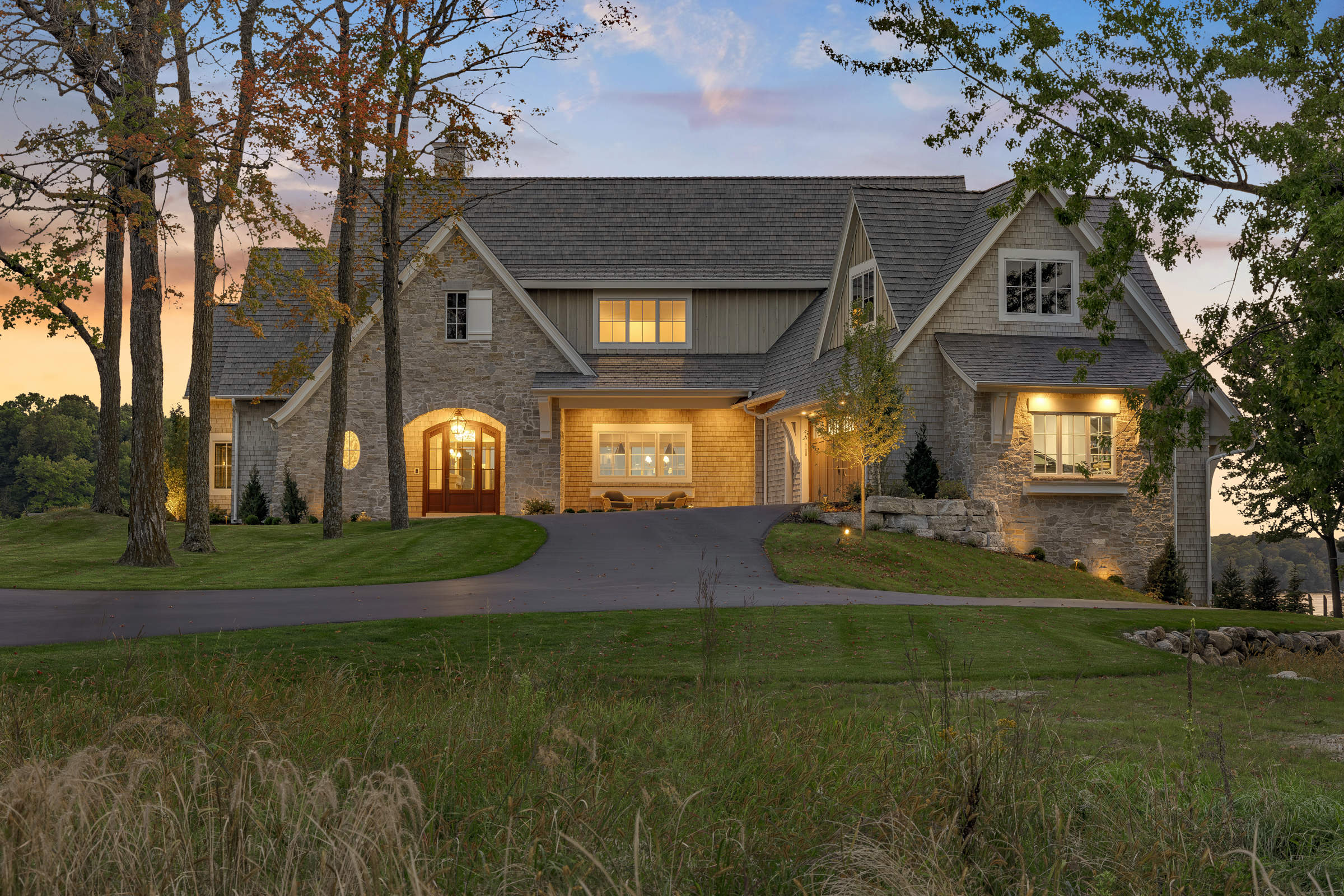
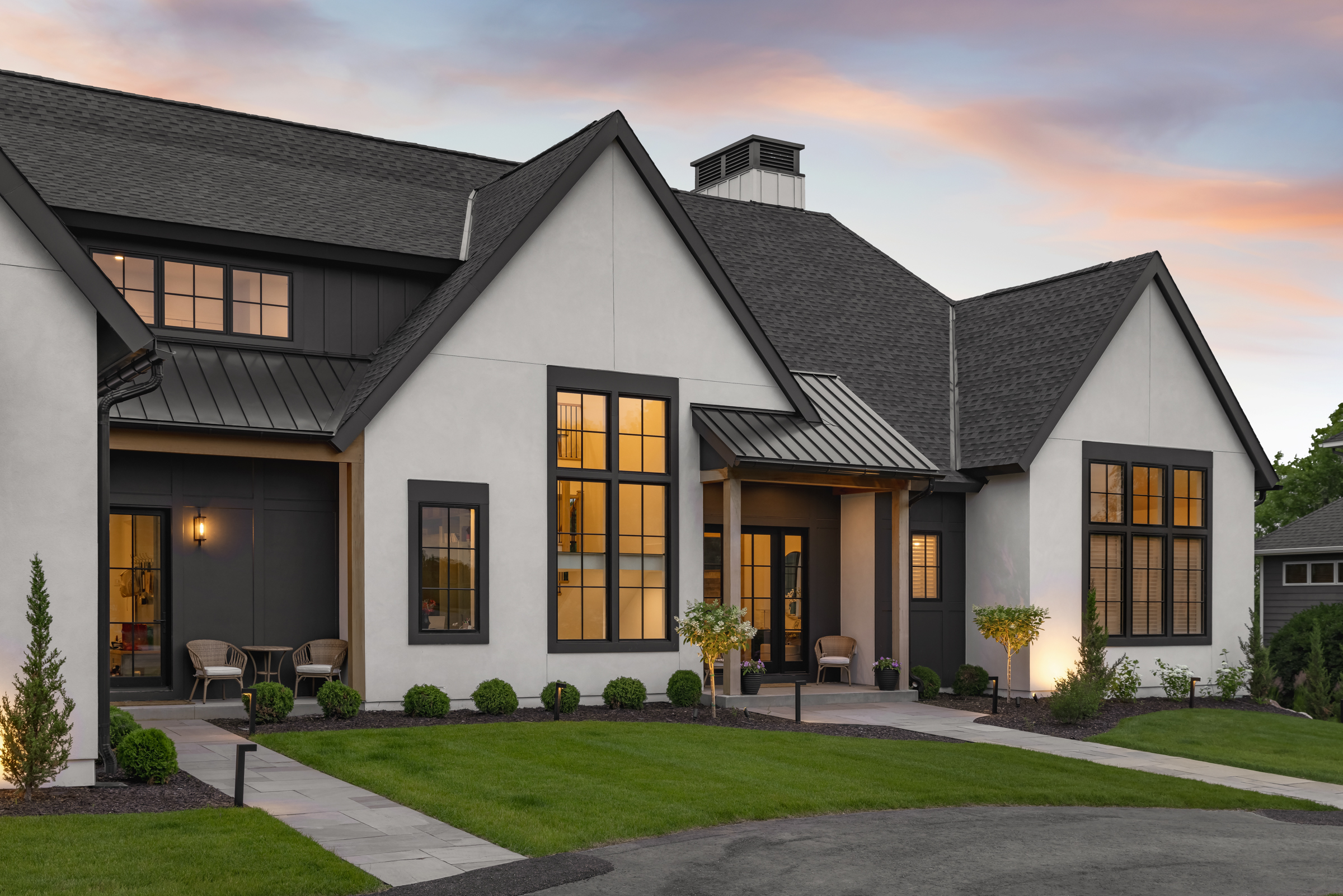
A Stonewood home at dusk: every roofline, every window, every material the result of a conversation that never stopped asking better questions.
The Conversation Continues
Even after move-in, the conversation continues. How is the morning light? Does the flow work as expected? What would you tell us to do differently? Stonewood stays in contact with our clients because their lived experience teaches us things we cannot learn any other way. Their feedback shapes how we approach the next design conversation, making every home we build a little better than the last.
That is the nature of genuine craft: continuous improvement through accumulated wisdom, earned one conversation at a time. It’s why Stonewood Custom Homes has spent decades building not just houses in Wayzata and the Twin Cities, but a reputation for listening well, building honestly, and delivering homes that age as gracefully as the families who live in them.
Wisdom, in this business, comes from conversation. So does everything worth building.
Start Your Conversation with Stonewood
The home you’ve been imagining won’t take shape from a single meeting or a single set of drawings. It will take shape through conversation: collaborative, honest, and guided by people who’ve spent decades learning what it takes to build exceptionally in Minnesota.
Stonewood Custom Homes approaches every project as a true three-way partnership between client, architect, and builder. Whether you’re envisioning new construction or a significant renovation through Revision by Stonewood, we bring the experience, the process, and the genuine curiosity to help you arrive at a home that serves your life for decades to come.
The best time to start the conversation is before you think you’re ready. Reach out to Stonewood today, and let’s begin.
Start Your Stonewood Project