

Not Bigger. Better.
Why the Finest Custom Homes Are Measured by the Quality of Every Square Foot, Not the Number of Them
Every custom home begins with a number. It might be spoken aloud in the first meeting or tucked quietly into a budget spreadsheet, but it is almost always there: a target square footage, a rough sense of how large the house needs to be to feel like the house a family has been imagining. It’s a natural place to start. Size is easy to understand, easy to compare, and easy to talk about with friends and neighbors. A bigger number feels like progress. It feels like value. It feels, to many people, like the clearest possible proof that a home is a serious one.
And yet, spend enough time walking through finished custom homes, and a more complicated truth begins to emerge. Some of the largest houses feel strangely hollow once the furniture is in. Rooms that looked generous on a floor plan turn out to be rooms nobody actually uses. Hallways stretch on to connect spaces that never needed to be connected. Meanwhile, some of the most beloved homes Stonewood has ever built are not the biggest ones at all. They are the ones where every room has a purpose, every proportion feels deliberate, and every square foot has been built so well that the family living there can’t imagine giving up a single inch of it.
That is the idea behind a simple phrase Stonewood has come to treat as something close to a philosophy: not bigger, better. It’s not a rejection of large homes. Plenty of the finest houses Stonewood has built are generous in scale. It’s a different way of deciding what a home is for, and where the money, the craft, and the attention should go once the real work of building begins.
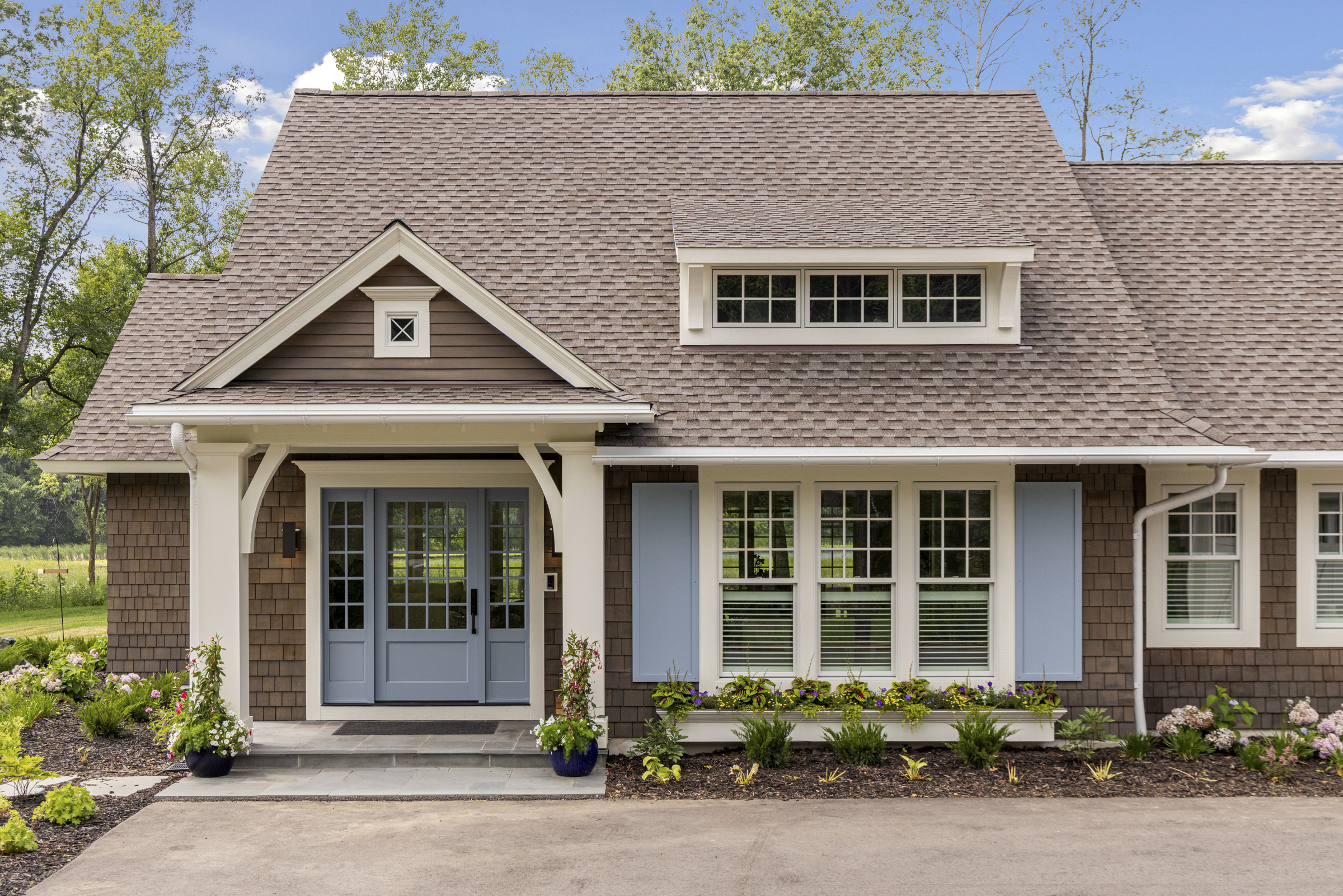
The Square Footage Trap
There’s a quiet trap built into the way most people think about the size of a custom home. It works like this: square footage is the most visible metric in the entire process, so it tends to become the metric that decisions get organized around. A family wants a home that feels spacious, so they ask for more square feet. They want room for guests, so they add more square feet. They want the house to feel like a real investment, so, again, more square feet. Each of those instincts is reasonable on its own. Together, they can lead to a home that is larger than it needs to be, and, almost paradoxically, less satisfying to live in than a smaller one would have been.
The reason is simple, and it comes down to money. A construction budget is a finite thing. Every additional square foot added to a home draws from the same pool of resources that would otherwise go toward the quality of the materials, the precision of the framing, the performance of the mechanical systems, and the skill of the trades doing the work. A home that grows by twenty percent doesn’t just cost twenty percent more to build. It also quietly raises the question of what has to give somewhere else to make the numbers work. All too often, what gives is the part of the house nobody photographs: the insulation strategy, the window specification, the care taken with finish carpentry in rooms that were added late in the process to hit a size target.
Stonewood has watched this dynamic play out for nearly eight decades, and the lesson has never changed. A family will almost always be happier, year after year, in a slightly smaller home built exceptionally well than in a larger home built to a lesser standard. The extra rooms rarely get used as much as people imagine. The craftsmanship gets noticed and appreciated every single day.
What a Better Home Actually Looks Like
It’s fair to ask what, exactly, “better” means, because the word can be slippery. In Stonewood’s experience, it comes down to a handful of qualities that have almost nothing to do with size, and almost everything to do with how a home is built and how it behaves once a family is living inside it.
A better home is one where the rooms are the right size for the lives that happen in them. A kitchen sized for how a family actually cooks and gathers feels more generous than a kitchen twice as large that forces everyone to walk a marathon between the stove and the refrigerator. A primary suite crafted around real routines, rather than around an arbitrary footprint, will feel like a retreat in a way an oversized one never does. Proportion, in other words, matters more than raw scale. A room that is well-proportioned feels calm and welcoming at almost any size. A room that is simply large can feel empty, echoing, and strangely impersonal.
A better home is also one that performs. It holds its temperature evenly from room to room through a Minnesota January. It stays quiet underfoot and behind closed doors. It keeps the weather outside where it belongs, season after season, without drafts, without moisture problems, without the slow accumulation of small failures that tends to afflict homes built quickly or built to hit a number. Performance is not a glamorous topic. It doesn’t make for a dramatic first impression at a showing. But it is, quite literally, the thing a family experiences every hour of every day they live in a house, and it is almost entirely a function of how well the home was built, not how big it is.
And a better home is one that has been finished with a level of care that holds up under close inspection. Run a hand along a piece of trim. Open a cabinet door and let it close. Look at the place where two different materials meet. In a better home, these small moments reward attention rather than punish it. Stonewood has always believed that the true test of a custom home isn’t what it looks like from across the room, but what it feels like when someone is standing close enough to touch it.
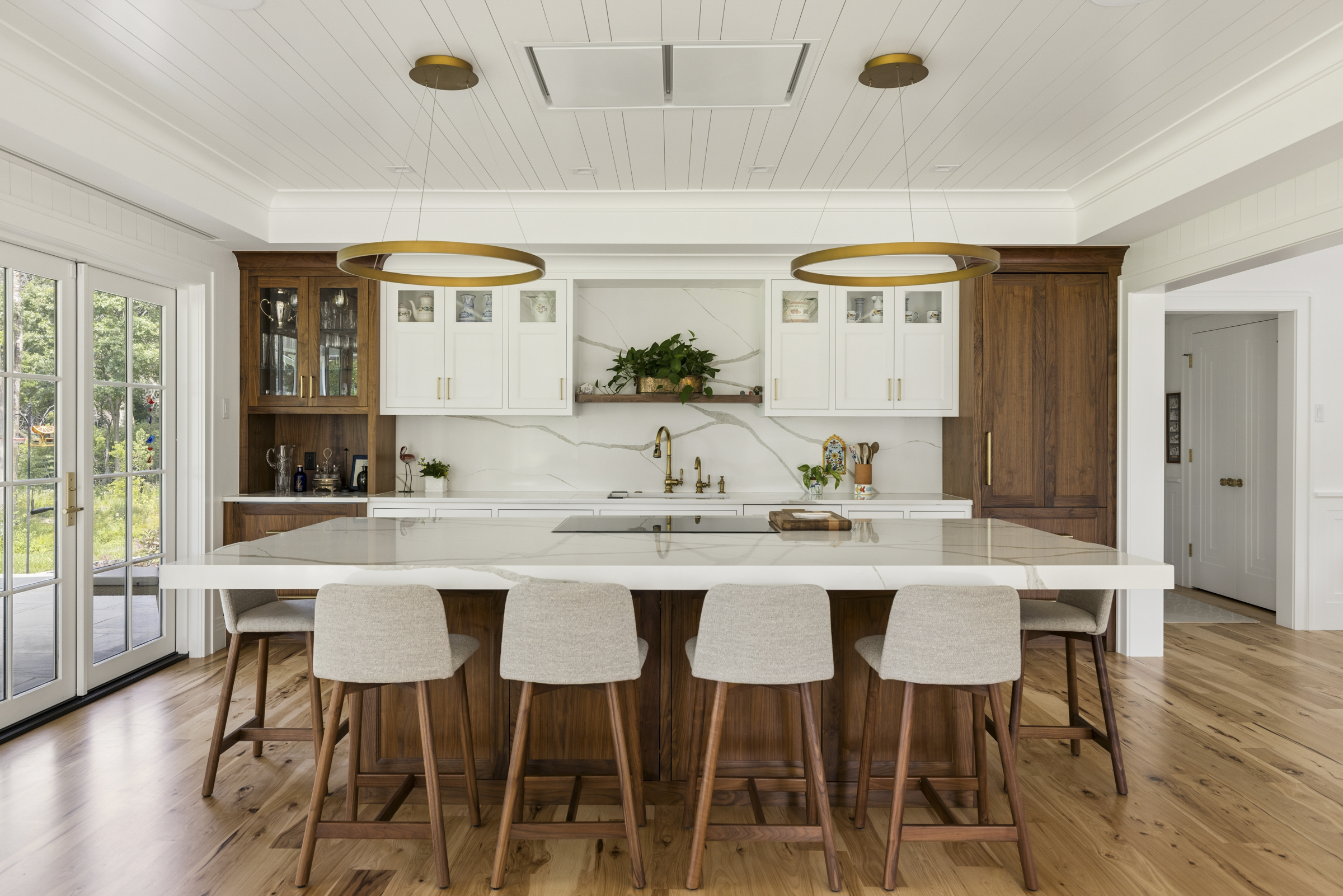
Where the Budget Goes When the Goal Is Better
When a family chooses to prioritize quality over size, something interesting happens to the construction budget. Resources that might have gone toward additional square footage can instead be directed toward the decisions that shape how a home feels and ages. That might mean a more robust building envelope, with insulation, air sealing, and window systems chosen for real performance in a climate that punishes shortcuts. It might mean higher-grade structural materials and tighter construction tolerances, so a house stays square and silent for decades. It might mean mechanical systems specified and installed with real care, so comfort is even and reliable from the first cold morning to the last warm evening of the year.
It can also mean investing more heavily in the finish work that people see and touch every day: custom millwork built by craftsmen who care about the details, natural stone and wood selected and installed with an eye toward how they will look not in the first year but in the twentieth, hardware that feels substantial in the hand and continues to feel that way long after the novelty of a new house has worn off. These are the decisions that turn a well-built house into a home people are proud of, and they are the decisions most likely to get squeezed when a project is organized around hitting a particular square footage number.
Stonewood works with families at the very beginning of a project to have exactly this conversation. Before the plans are finalized, before the scope is locked, there’s a candid discussion about where every dollar is likely to deliver the most lasting value. Sometimes that conversation leads a family to a larger home than they first imagined, because the program genuinely requires it. Just as often, it leads them to a more considered, more carefully built home than the one they first described, and, almost without exception, to a greater sense of confidence that the money is going to the right places.
The Long Life of a Well-Built Home
There’s another dimension to the not-bigger-better idea that tends to reveal itself only with time. A home that is thoughtfully scaled and exceptionally well built is simply easier to live in, and easier to keep. It costs less to heat and cool, because a tight, well-insulated building envelope does most of the work. It requires less maintenance, because quality materials and careful installation tend to age gracefully rather than demand constant repair. And it adapts more readily to the changing needs of the family living in it, because rooms that were proportioned well in the first place are easier to repurpose than rooms that were only ever large.
That durability is not a minor consideration for the families Stonewood builds for. Most of them are not building a house to sell in five years. They are building a home they intend to live in for decades, a home where children will grow up, where holidays will be hosted, where the quiet daily rhythms of an entire life will play out. For that kind of home, the decisive question is rarely how large it is. It’s whether it will still feel right, still perform, still be a source of pride and comfort when the new-house smell has faded and the real living has begun.
Across the Lake Minnetonka corridor, from Wayzata to Deephaven to Orono and Minnetonka, Stonewood has built homes of many sizes, from modest, carefully considered family residences to substantial estates. The thread that connects them isn’t square footage. It’s the discipline of building every part of the house to the same high standard, regardless of how many rooms there happen to be.
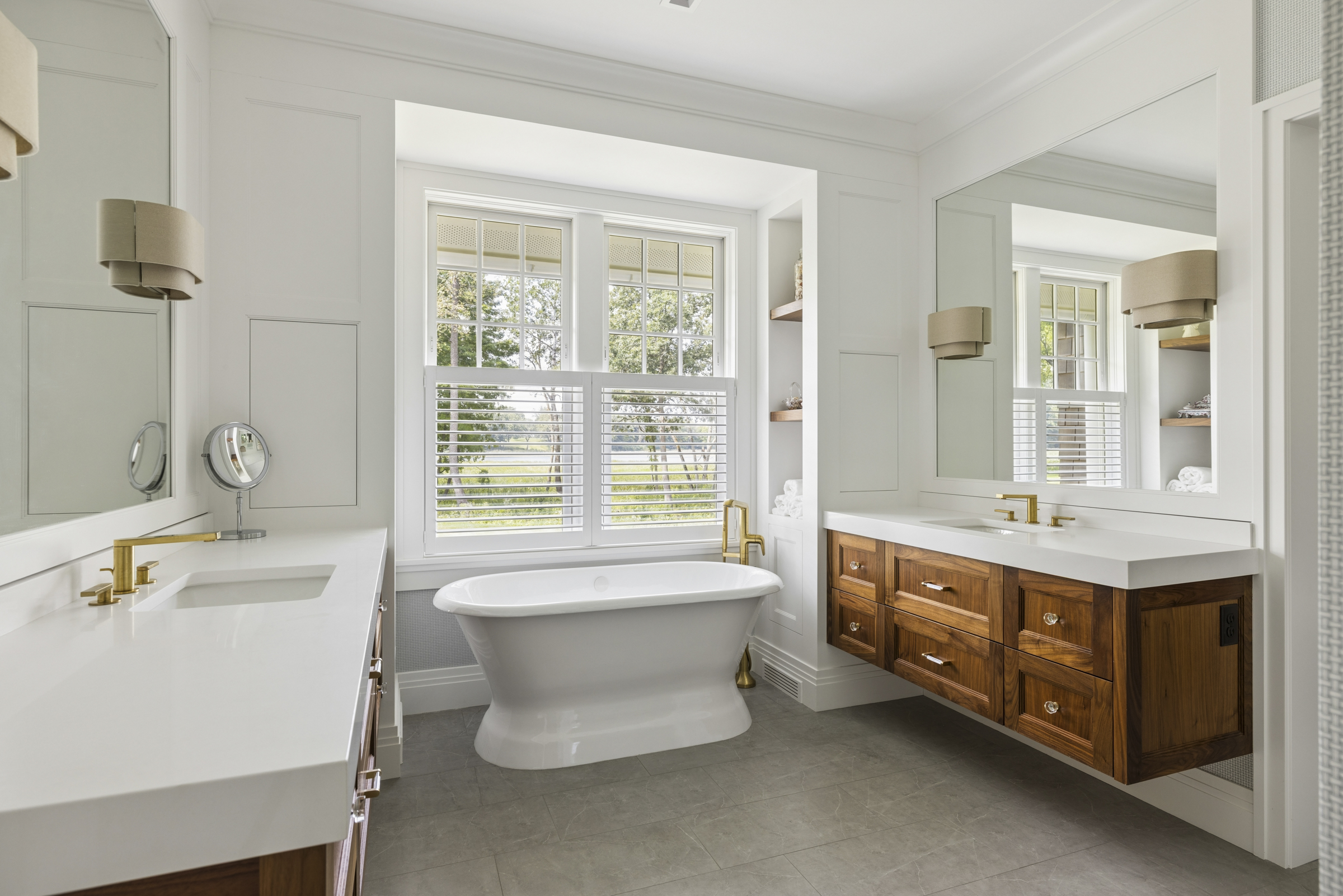
A Different Way to Measure a Custom Home
It may be time for the custom home conversation to change. Not because large homes are a mistake, and not because there is something virtuous about building small for its own sake. But because the measure that matters most, the one a family will actually feel on a random Tuesday evening ten years from now, has very little to do with how many square feet a house contains. It has to do with whether each room was built well, whether each decision was made with care, and whether the home as a whole feels like it was made for the specific people living in it.
That’s the standard Stonewood has held itself to since 1947. It’s why the firm spends so much time, at the front end of every project, asking questions that have nothing to do with size: how a family really lives, what they use and what they don’t, which parts of a home they’ll treasure and which they’ll quietly stop noticing. And it’s why Stonewood is perfectly comfortable telling a client, when the situation calls for it, that the better answer isn’t a bigger house. It’s a better-built one.
- Which rooms will our family genuinely use every single day, and which ones will we use only a few times a year
- If we reduced the overall size by ten percent, where would we redirect that budget to improve quality
- How will this home need to serve us in ten years, and in twenty, as our family changes
- What would we rather have more of: extra rooms, or a home that performs, ages, and feels exceptional in every one of them
- How does our builder approach quality control, tolerances, and finish work across the entire home, not just in the showpiece rooms
- Can we visit a home our builder completed more than ten years ago to see how it has held up
A custom home is one of the largest and most personal investments a family will ever make, and it deserves to be built around the right question. Not how big can it be. How well can it be built. That is the question Stonewood asks at the start of every project, and the one it keeps asking all the way through to the final walkthrough, because the answer is what a family lives with, day after day, for as long as the house stands.
Not bigger. Better. It’s a simple phrase, and a demanding standard. It’s also, in Stonewood’s experience, the single most reliable path to a custom home that a family never wants to leave.
Ready to Build a Home That’s Better, Not Just Bigger?
Every Stonewood custom home begins with an honest conversation about how you really want to live, and where your investment will deliver the most lasting value. If you’re exploring a custom home anywhere along the Lake Minnetonka corridor, we would welcome the chance to walk your site and share what the Stonewood process looks like from the inside.
Let’s build the home that’s worth every square foot.