


Modern Home Design Ideas for Your Custom Dream Home
Expert insights from Stonewood Custom Homes on building spaces that transform how Minnesota families live.
The custom home market in 2025 presents a fascinating paradox. While architectural software and virtual reality tours allow unprecedented visualization of spaces before construction begins, industry data shows that 68% of homeowners report at least three significant regrets within the first two years of occupancy. The issue isn’t access to information or design inspiration, it’s knowing which modern ideas translate from screen to lived experience. At Stonewood Custom Homes, we’ve spent decades helping Minnesota families navigate these critical building decisions with expert craftsmanship.
Contemporary residential architecture has evolved dramatically over the past decade. What began as a reaction against compartmentalized floor plans has matured into a nuanced understanding of how spaces can be simultaneously open and defined, minimal yet warm, technologically advanced but intuitively simple. The challenge lies in distinguishing between trends with staying power and those that will date your home before the mortgage is halfway paid. This is where Stonewood’s construction expertise and building experience throughout the Twin Cities becomes invaluable.
The Foundation: Understanding Space Psychology
Neuroscience research on built environments reveals something architects have intuitively understood for centuries: humans need both prospect and refuge. We’re drawn to spaces where we can see without being exposed, gather without feeling crowded, retreat without isolation. Modern home construction succeeds when it creates these psychological anchors deliberately rather than accidentally. Stonewood’s building approach starts with understanding these fundamental human needs before framing a single wall.
The death of the formal living room isn’t about casual culture replacing formality. It reflects a deeper shift in how families occupy their homes. Time-use studies show American families spend 73% of their at-home waking hours in kitchens and adjacent spaces, regardless of how many other rooms exist. Fighting this pattern by building underutilized formal spaces wastes both construction budget and lifetime value. Modern craftsmanship embraces behavioral reality, and Stonewood’s custom home plans reflect how Minnesota families actually live.

The current trajectory in residential architecture moves toward what builders call “soft zoning.” Unlike rigid room divisions or completely open loft spaces, soft zoning uses subtle architectural cues to define areas without walls. Ceiling height variations, flooring transitions, strategic furniture placement, and lighting changes all signal spatial boundaries that our minds recognize even as our eyes see openness. This approach provides psychological definition while maintaining the flow and natural light that makes modern homes feel expansive. Stonewood integrates soft zoning techniques throughout our custom home construction to create spaces that feel both open and purposeful.
Space Utilization Research
Studies tracking actual room usage in custom homes reveal that families utilize 82% of soft-zoned open spaces versus only 54% of traditionally walled rooms. The psychological effect of visual connection keeps people engaged with multiple areas simultaneously.
The Kitchen Evolution: From Appliance Garage to Life Hub
Kitchen construction has undergone its most significant transformation in fifty years, driven not by aesthetic trends but by fundamental changes in how households function. Remote work, meal delivery services, specialized dietary needs, and the collapse of formal dining have converged to demand kitchen spaces that serve multiple simultaneous purposes without sacrificing efficiency. Stonewood Custom Homes builds kitchens that function as true command centers for modern Minnesota living.
The traditional work triangle, that sacred sink-stove-refrigerator geometry, made sense when one cook prepared meals while others remained in separate rooms. Modern kitchens require work zones rather than triangles because multiple people often occupy the space simultaneously, engaged in different activities. Research from the National Kitchen and Bath Association shows that 89% of new custom homes now incorporate at least two distinct work zones within their kitchen layouts. Every Stonewood kitchen is built with these multiple work zones to eliminate congestion and improve functionality.
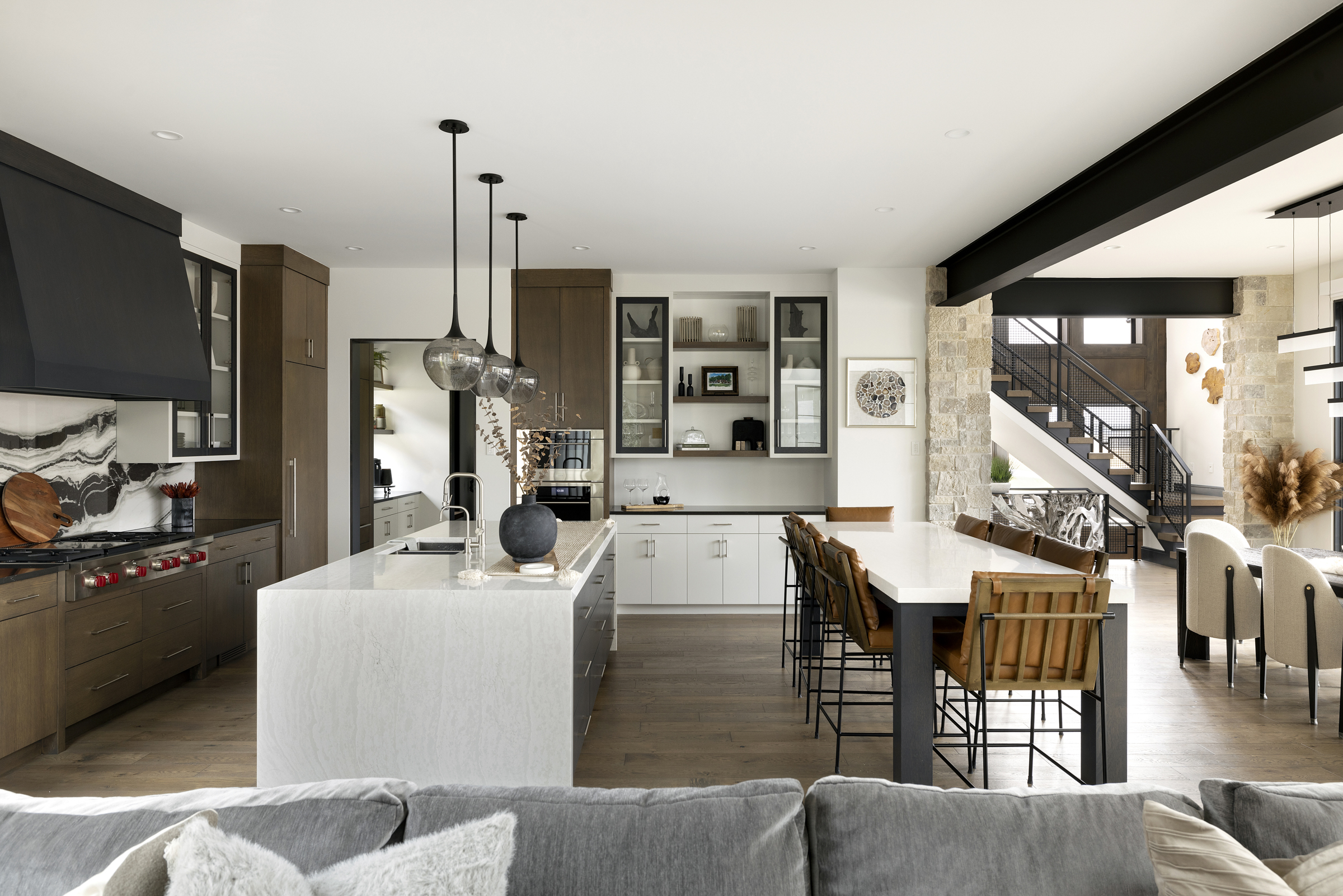
The most significant functional innovation isn’t visible: it’s electrical infrastructure. Contemporary kitchens demand power, and lots of it. Beyond the obvious appliances, modern families need charging stations for devices, outlets for specialty appliances that live on countertops, USB ports, and increasingly, low-voltage wiring for smart home integration. Building codes require one 20-amp circuit per kitchen, but functional modern kitchens incorporate four to six dedicated circuits, positioned strategically for current and future needs. Stonewood’s electricians install robust kitchen electrical systems that support today’s technology and tomorrow’s innovations.
Material selection in kitchens has also shifted toward performance over appearance alone. The all-white kitchen that dominated the 2010s is giving way to warmer neutrals and durable surfaces that maintain beauty under daily use. Quartz has largely replaced marble for working surfaces, not because it’s more attractive, but because it performs better under the thermal stress and staining that real cooking produces. Porcelain tile has evolved to convincingly mimic natural materials while offering superior durability and maintenance characteristics. At Stonewood, we guide homeowners toward materials that look beautiful on day one and remain stunning years later through quality craftsmanship.
Primary Suites: Building for Actual Rest
Sleep science has fundamentally altered how we should approach bedroom construction. Research from the American Academy of Sleep Medicine identifies specific environmental factors that dramatically impact sleep quality: complete darkness, temperatures between 60-67°F, minimal noise, and air quality. Yet most bedroom construction prioritizes aesthetics over these functional requirements. Stonewood’s primary suite craftsmanship incorporates sleep science principles to create truly restorative spaces.
Window orientation matters more than most homeowners realize. Eastern-facing bedrooms receive direct morning sun, beneficial for natural wake cycles but challenging for anyone hoping to sleep past sunrise. Western exposures create afternoon heat gain that can make rooms uncomfortable by evening. Northern windows provide the most consistent, gentle natural light without thermal extremes. Southern exposures offer wonderful winter warmth but require careful shading to prevent summer overheating. Stonewood Custom Homes carefully considers window placement during the site planning phase to optimize bedroom orientation for Minnesota’s climate.
The modern primary suite increasingly incorporates dedicated spaces for activities beyond sleep. With remote work normalizing flexible schedules, bedrooms often house morning workout routines, meditation practices, or early video calls that shouldn’t wake sleeping partners. Smart construction anticipates these uses through deliberate zoning: a sitting area that genuinely functions for work, not just decorative chairs that accumulate clothing. Stonewood builds primary suites that support multiple lifestyle needs while maintaining their primary function as sleep sanctuaries.
Sleep Environment Impact
Bedrooms optimized for circadian rhythm support show measurable improvements: occupants fall asleep 22% faster on average and report 31% better sleep quality. Key factors include automated blackout shades, optimal window placement, and HVAC systems rated below 30 decibels.
The Light Factor: Engineering Natural Illumination
Minnesota’s latitude creates dramatic seasonal light variations that demand strategic window placement. December daylight is precious and limited, while July evenings seem endless. Contemporary architecture has given us tools to maximize beneficial natural light while controlling thermal gain: high-performance glazing, automated shading systems, and computer modeling that predicts sun angles throughout the year. Stonewood uses advanced daylighting analysis software to engineer optimal natural light for every custom home we build.
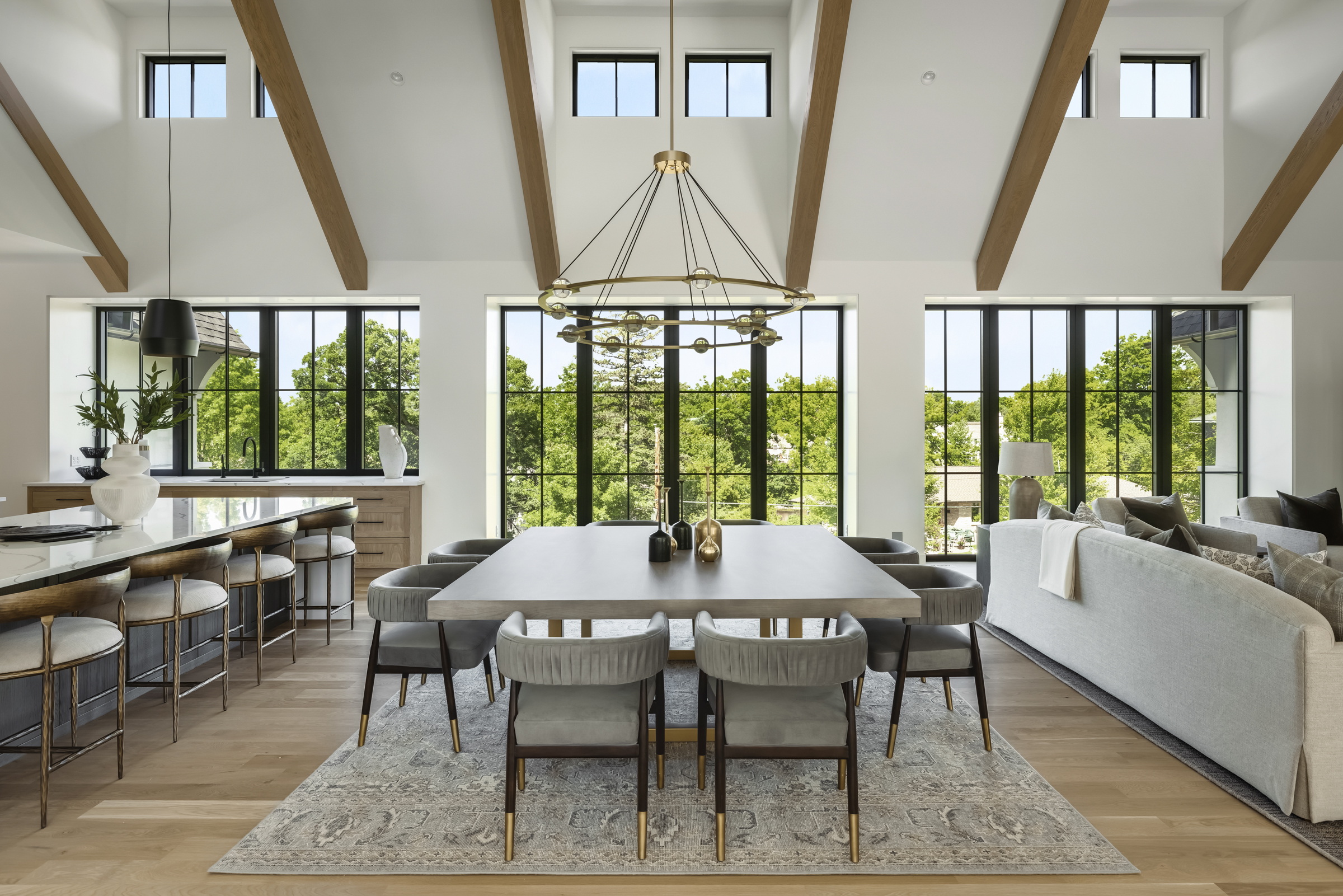
The most effective modern daylighting strategies employ multiple techniques simultaneously. South-facing clerestory windows capture low winter sun, bouncing it deep into interior spaces while summer’s high-angle sun stays outside. Skylights positioned over interior hallways and stairwells eliminate the need for daytime artificial lighting in circulation spaces. Corner windows dissolve the traditional sense of enclosure, connecting interior spaces to landscape in ways that feel expansive without sacrificing thermal performance. These are signature elements in Stonewood’s modern home construction throughout the Twin Cities area.
Artificial lighting installation has evolved beyond simple aesthetics. Tunable LED systems that adjust color temperature throughout the day can support natural circadian rhythms, warming toward evening and cooling during morning hours. Task lighting positioned at appropriate heights eliminates the harsh shadows created by overhead fixtures alone. The result is layered illumination that feels natural and reduces eye strain during extended indoor time. Stonewood’s lighting specialists create comprehensive plans that integrate natural and artificial light seamlessly.
Storage Architecture: The Invisible Essential
Contemporary minimalist aesthetics demand that storage be abundant yet invisible. This creates a construction challenge: modern life generates significant possessions requiring storage, seasonal clothing, sports equipment, household supplies, but visible clutter destroys the clean lines that define modern architecture. The solution lies in building storage into the structure from the beginning rather than adding it as afterthought. Stonewood Custom Homes excels at creating integrated storage solutions through expert carpentry that maintains clean aesthetics while providing generous capacity.
Research on residential storage reveals interesting patterns. The average American household owns approximately 300,000 items, yet 80% of used items come from just 20% of possessions. This suggests that strategic storage should separate frequently accessed items from seasonal or occasional use, making the former convenient while the latter can occupy less premium space. Stonewood’s construction process includes detailed storage planning to ensure every possession has an appropriate home.
Modern homes integrate storage opportunities throughout: stair risers that pull out to reveal shoe storage, window seats with lift-up access to concealed bins, kitchen islands with deep drawers on both sides, primary closets with dedicated zones for current and off-season clothing, mudrooms with individual lockers that prevent communal chaos. These aren’t luxury additions, they’re functional requirements that maintain the uncluttered aesthetic modern architecture requires. Every Stonewood home incorporates strategic storage planning from the initial construction phase.
Circulation Spaces: The Overlooked Opportunity
Hallways, stairwells, and entryways rarely inspire building enthusiasm. They’re viewed as necessary waste, square footage that doesn’t serve primary functions. This perspective misses significant opportunity. Circulation spaces determine how your home feels to move through, whether spaces feel connected or isolated, and how daily routines flow or frustrate. Stonewood transforms circulation spaces from afterthoughts into thoughtful transitions that enhance daily living through quality craftsmanship.
Width matters enormously. The minimum code requirement for hallways is 36 inches, but this creates spaces that feel tight when two people pass. Increasing to 42-48 inches transforms hallways from utilitarian passages into comfortable transitional spaces that can accommodate furniture, art, or built-in features without feeling cramped. Stonewood Custom Homes builds circulation spaces with generous proportions that feel comfortable and functional.
Strategic sightlines engineered through circulation spaces dramatically impact how homes feel. What do you see from your entryway? Does the kitchen sink overlook the backyard or the garage? Can you monitor children playing outside from multiple rooms? Modern floor plans consider these views as deliberately as room dimensions, understanding that visual connection creates psychological comfort that rigid separation cannot provide. Stonewood’s construction planning carefully considers sightlines throughout every custom home we build.
Outdoor Integration: Minnesota’s Three-Season Challenge
Building outdoor living spaces for Minnesota’s climate requires acknowledging an uncomfortable truth: these areas will look different than California or Arizona homes featured in magazines. That’s not limitation, it’s opportunity to create spaces specifically adapted to our dramatic seasonal variation. Stonewood specializes in outdoor construction optimized for Minnesota’s unique climate challenges and opportunities.
The most successful outdoor builds embrace change rather than fight it. Covered patios positioned to capture summer breezes while providing winter interest when viewed from interior spaces. Fire features that extend the comfortable outdoor season into spring and fall while creating focal points during snow-covered months. Evergreen plantings that provide structure year-round instead of deciduous landscapes that look barren five months annually. These climate-appropriate strategies define Stonewood’s approach to Minnesota outdoor living construction.
Three-season porches represent Minnesota’s signature outdoor space, used actively from April through October. Proper construction requires generous sizing, effective screening systems, adequate ventilation through ceiling fans, and furniture that tolerates temperature swings. When built well, these spaces become preferred rooms during comfortable weather, functioning as dining areas, offices, workout spaces, and gathering spots that offer outdoor connection without insect exposure. Stonewood has perfected the three-season porch through decades of Minnesota custom home building.
Outdoor Space Value
Quality outdoor living spaces increase home value by an average of 12-15% in Minnesota markets, but only when properly built for climate. Poorly constructed outdoor areas that sit unused become maintenance burdens rather than assets, depreciating rather than adding value.
Technology Infrastructure: The Hidden Foundation
Smart home technology has evolved from novelty to necessity. But there’s a fundamental difference between homes where technology was added after construction and those built with integration from the beginning. The former involves visible compromises and limited functionality. The latter feels seamless and future-ready. Stonewood builds smart home infrastructure into every custom home during construction, creating technology-ready homes that adapt as systems evolve.
The critical infrastructure includes elements nobody sees but everyone depends on: structured cabling to every room, power provisions for future devices, mounting provisions for screens and sensors, and conduit for inevitable upgrades. Installing this infrastructure during construction costs a fraction of retrofitting later while enabling functionality that drives both daily convenience and resale value. Stonewood’s electrical and technology planning ensures your home is ready for current and future smart home systems.
Futureproofing matters more than specific current technology. Today’s cutting-edge smart home system will be obsolete within five years. Build flexibility into your infrastructure so components can be upgraded without demolition. Specify electrical and network capacity that exceeds current requirements because tomorrow’s devices will demand more power and bandwidth than today’s projections anticipate. This forward-thinking approach is standard in every Stonewood custom home construction.
Material Decisions: Performance Meets Craftsmanship
Modern architecture has access to materials that didn’t exist a generation ago: engineered woods stronger than solid timber, composite cladding that outlasts traditional options, glazing that insulates as well as walls, concrete systems that cure in days rather than weeks. These innovations enable construction that wasn’t previously possible while often improving long-term performance and reducing maintenance. Stonewood stays current with material innovations to offer homeowners the best performing and most beautiful options for Minnesota construction.
The challenge lies in distinguishing genuine innovation from marketing hype. Some new materials offer legitimate advantages: fiber cement siding that lasts fifty years instead of fifteen, metal roofing that may never require replacement, composite decking that won’t rot or warp. Others sacrifice durability for lower initial cost, creating false economy that becomes expensive over a home’s lifetime. Stonewood’s material expertise and craftsmanship help homeowners make informed decisions that balance initial investment with lifetime value.
Material authenticity has returned to prominence after a period where manufactured alternatives dominated. Real hardwood floors, genuine stone, actual metal, these materials age gracefully, developing patina that enhances rather than degrades appearance. This doesn’t mean avoiding all engineered products, it means understanding where authentic materials provide value and where high-quality alternatives perform equivalently or better. Stonewood Custom Homes guides material selection with decades of performance data from Minnesota’s demanding climate, always prioritizing quality craftsmanship.
The Energy Performance Revolution
Building science has advanced dramatically over the past decade. Homes constructed today can maintain comfortable temperatures with 50-70% less energy than houses built just fifteen years ago. This isn’t theoretical, it’s measurable performance achieved through integrated approaches to insulation, air sealing, mechanical systems, and window technology. Stonewood has embraced high-performance building techniques that dramatically reduce operating costs while improving comfort in Minnesota’s extreme climate.
The modern high-performance building envelope starts with continuous insulation that eliminates thermal bridging, airtight construction that prevents drafts and moisture intrusion, and windows that insulate as effectively as walls. These elements work together synergistically. Proper air sealing makes insulation more effective. High-performance windows reduce heating and cooling loads. Advanced HVAC systems work less while maintaining better comfort. Stonewood Custom Homes builds every home with high-performance building science principles that outperform conventional construction through superior craftsmanship.
The financial case for high-performance construction is compelling. While initial costs may increase 5-10%, annual energy savings of 40-60% produce positive cash flow within the first few years. Over a thirty-year mortgage, the cumulative savings typically exceed the upfront investment multiple times while providing superior comfort, better air quality, and reduced environmental impact throughout. Stonewood’s energy-efficient homes deliver lower utility bills month after month, year after year.
Performance Building Economics
High-performance homes certified through programs like Passive House or LEED demonstrate 50% lower operating costs while commanding 7-12% price premiums at resale. The combination of reduced monthly expenses and increased property value creates compelling financial returns beyond environmental benefits.
Bringing It Together: Stonewood’s Integrated Building Approach
The most successful custom homes don’t result from selecting individual features from a checklist. They emerge from integrated thinking where multiple building systems reinforce each other. Strategic window placement that supports passive solar heating reduces mechanical system requirements. Thoughtful storage construction maintains clean aesthetics that make spaces feel larger. Smart home infrastructure enables automation that improves both convenience and efficiency. This integrated building approach defines every Stonewood custom home project.
This integration requires seeing your home as a complete system rather than a collection of rooms and features. How do spaces connect and flow? Where does natural light enter and how does it move through the day? What activities happen where, and how can construction support rather than constrain these patterns? These questions produce homes that work holistically rather than rooms that function in isolation. Stonewood’s construction process addresses these systemic considerations from the initial concept through final craftsmanship details.
The modern custom home represents an opportunity to create living environments specifically calibrated to your needs, your site, your climate, and your lifestyle. That opportunity is wasted when building decisions chase trends rather than solve problems, when aesthetics override function, or when short-term budget pressures compromise long-term performance. Getting it right requires experience, foresight, and discipline to make strategic choices rather than expedient ones. This is the construction expertise and craftsmanship Stonewood brings to every custom home and remodeling project in Minnesota.
This is what modern construction should deliver: homes that feel right not just move-in day but years later, spaces that adapt as life changes, quality craftsmanship that becomes more apparent over time rather than less, and performance that improves your daily life in ways both obvious and subtle. That’s the standard Stonewood Custom Homes builds toward with every project, creating homes that combine innovative modern architecture with timeless quality and superior craftsmanship.
Partner with Stonewood for Your Modern Custom Home
At Stonewood and Revision by Stonewood, we’ve spent decades translating architectural visions into high-performance reality throughout Minnesota. We understand which modern innovations deliver genuine value and which create more complexity than benefit. Stonewood knows how to maximize return on every square foot and every dollar invested, ensuring your custom home performs as beautifully as it looks through expert craftsmanship.
Your project deserves strategic thinking that goes beyond surface-level decisions. It needs integrated construction that considers how every element affects everything else, creating homes that work holistically rather than showing off isolated features. That’s the building approach Stonewood brings to every custom home and remodel in the Twin Cities area.
Ready to explore what’s possible for your property? Let’s discuss your vision, your priorities, and how Stonewood’s modern construction expertise can create living spaces that genuinely improve daily life. Let’s build something that gets better with time through exceptional craftsmanship.
Contact Stonewood Custom Home Builder for new construction that integrates innovation with timeless building principles, or Revision by Stonewood for remodeling that transforms existing homes into modern, high-performance spaces.
Start Your Stonewood Project Today